Kagemitsu Nihonto: Why Collectors Obsess Over This Bizen Master
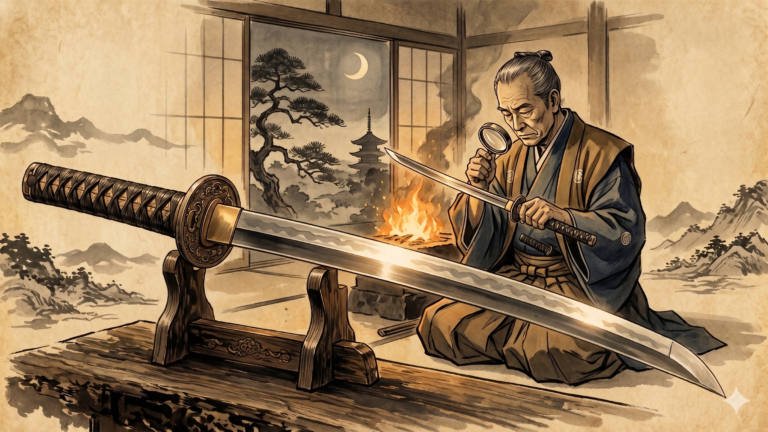
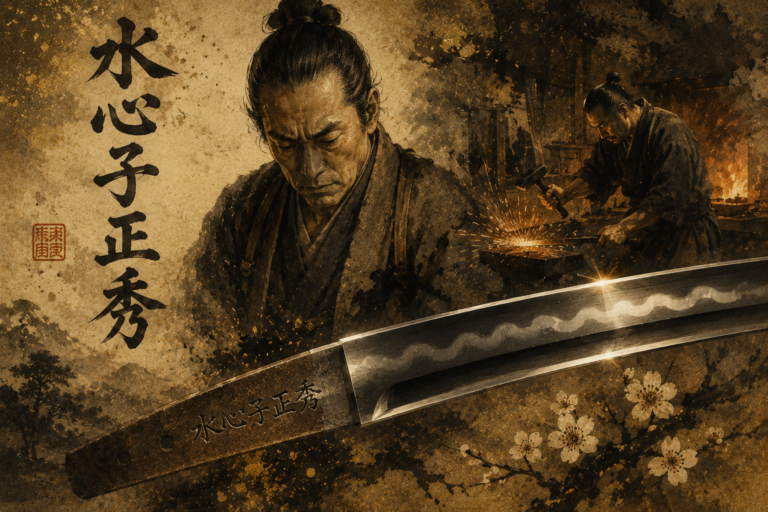
Among the pantheon of legendary Japanese swordsmiths, one name commands quiet but profound reverence: Kagemitsu (景光). Active during the late Kamakura period in the Bizen Osafune school, Kagemitsu forged blades that represent the zenith of Japanese sword craftsmanship. For nihonto collectors and enthusiasts, a Kagemitsu blade is not merely a weapon — it is a meditation on metallurgy, artistry, and centuries of cultural continuity. But what exactly makes Kagemitsu’s work so extraordinary, and why do these swords remain among the most coveted nihonto in the world?
Who Was Kagemitsu? The Man Behind the Blades
Kagemitsu was the son of Nagamitsu and the grandson of Mitsutada, two of the most celebrated smiths in Japanese sword history. He worked in the Osafune school in Bizen Province (modern-day Okayama Prefecture) during the late 13th and early 14th centuries. The Osafune lineage was already the most prolific and influential sword-making tradition in Japan, and Kagemitsu carried that legacy forward with distinctive innovation.
What set Kagemitsu apart from his predecessors was his willingness to experiment. While he inherited the elegant, refined style of Nagamitsu, he pushed the boundaries of hamon design and introduced elaborate horimono (blade carvings) that were unusual for tachi and tantō of the period. His dated works span from roughly 1308 to 1329, placing him at a critical juncture in Japanese sword evolution — the transition from the height of Kamakura-era craftsmanship toward the more utilitarian demands that would characterize the Nanbokuchō period.
The Bizen Osafune Tradition and Its Significance
To truly appreciate Kagemitsu’s nihonto, you need to understand the world he worked within. The Bizen tradition is one of the five major sword-making traditions (Gokaden) of Japan, and Osafune was its beating heart. Bizen smiths had access to exceptional iron sand and developed distinctive forging techniques that produced blades with rich, active jihada (grain patterns) and vibrant hamon.
Why Bizen Blades Stand Apart
- Jihada: Bizen smiths favored mokume-hada (wood-grain pattern) and itame-hada, creating surfaces that seem to breathe with life under light.
- Hamon: The Osafune school was famous for chōji-midare — a clove-flower-shaped irregular temper line that gives blades a dynamic, almost organic appearance.
- Utsuri: Many Bizen blades display utsuri, a ghostly shadow pattern in the ji that is among the most difficult features to produce and one of the most prized by connoisseurs.
Kagemitsu mastered all of these hallmarks while adding his own signature elements, making his work identifiable even without a mei (signature) to trained appraisers.
Distinctive Features of Kagemitsu’s Nihonto
Collectors and kantei (attribution) experts look for several key characteristics when evaluating a potential Kagemitsu blade:
Hamon: Kata-ochi Gunome and Beyond
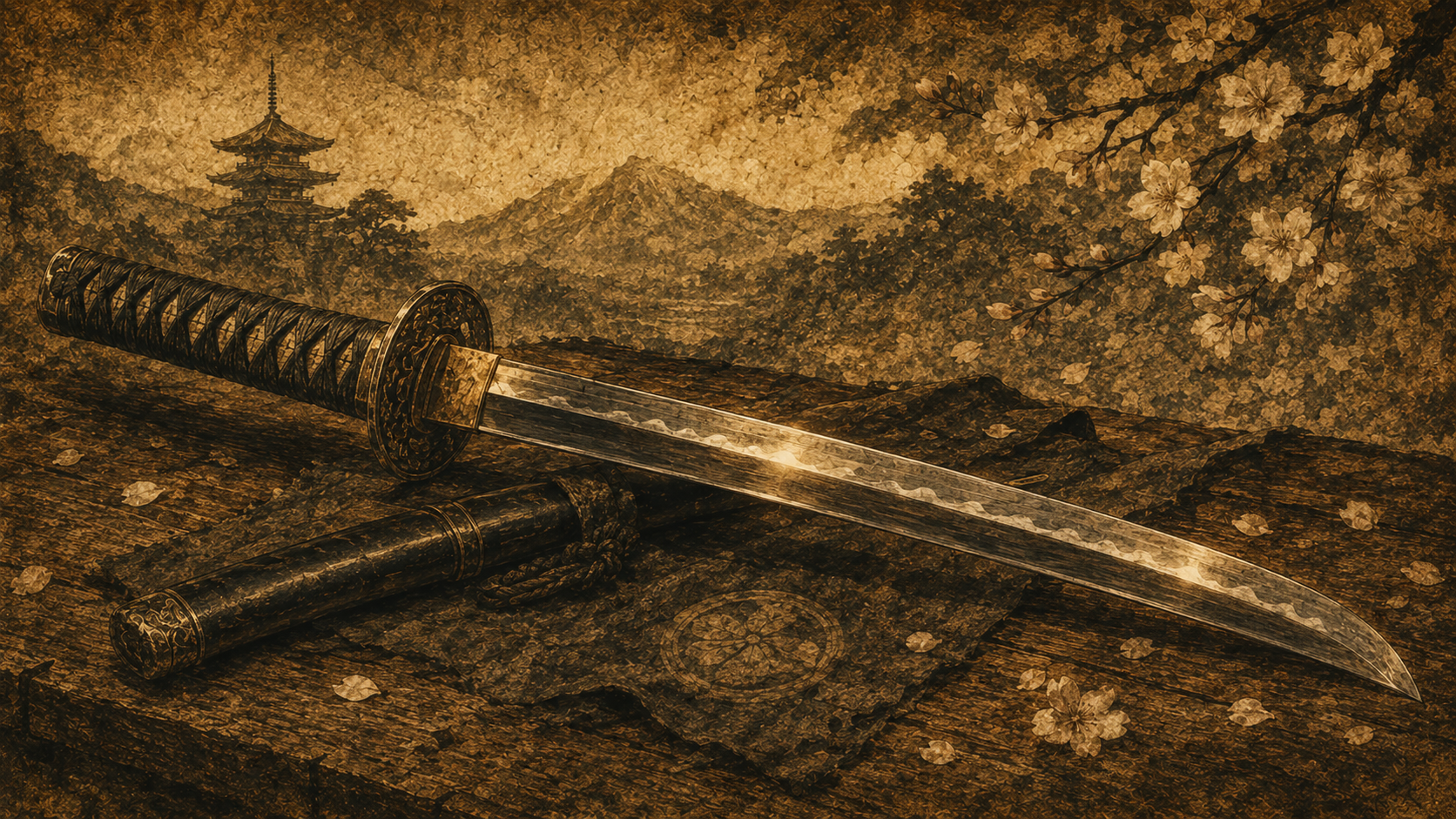
While Kagemitsu could produce the classic Bizen chōji-midare, he became particularly known for kata-ochi gunome — a distinctive pattern where one side of each undulation is taller than the other, creating an asymmetric rhythm along the cutting edge. This pattern became something of a signature and is a strong indicator in attribution. His hamon are typically rendered in nioi-deki (a fine, mist-like crystalline structure) with abundant activity including ashi (legs of temper extending toward the edge) and yō (isolated temper islands).
Elaborate Horimono
One of the most striking aspects of Kagemitsu’s work is his use of intricate carvings. He frequently incorporated Buddhist motifs — bonji (Sanskrit characters), rendai (lotus pedestals), and figures of deities — into his blades with a level of detail that few contemporaries could match. These horimono were not merely decorative; they carried spiritual significance for the warriors who carried the swords.
Sugata: Shape and Form
Kagemitsu’s tachi tend to display a graceful toriizori (curvature centered near the middle of the blade) with a modest kissaki (point), typical of the late Kamakura aesthetic. His tantō often feature a slight uchizori (reverse curvature) and are considered among the finest short swords of the era. The overall proportions convey a sense of balance and restrained elegance that distinguishes them from the broader, more imposing works of the Nanbokuchō period that followed.
Kagemitsu Blades in the World of NBTHK Certification
For modern collectors, the authenticity and quality of a nihonto is largely validated through certification by the NBTHK (Society for the Preservation of the Japanese Art Sword). Kagemitsu blades have received designations ranging from Hozon (worthy of preservation) to Tokubetsu Hozon (especially worthy of preservation) and even Jūyō Tōken (important sword) — the latter being reserved for works of exceptional historical and artistic merit.
Several Kagemitsu works are also classified as National Treasures and Important Cultural Properties of Japan, including a famous tachi dated 1322 that exemplifies every virtue of the Osafune school at its peak. These designations mean that the finest Kagemitsu nihonto are virtually never available for private sale. However, blades attributed to Kagemitsu or his immediate school do appear on the market from time to time, and they command serious attention — and serious prices — from knowledgeable collectors.
Kashu Kagemitsu vs. Bizen Kagemitsu: Avoiding Confusion
It is worth noting that more than one smith used the name Kagemitsu. The most famous is, of course, the Bizen Osafune Kagemitsu discussed here. However, there was also a Kashu Kagemitsu who worked in Kaga Province. While Kashu Kagemitsu produced competent work in the tradition of the Kashu school, his blades should not be confused with those of his Bizen namesake. The two smiths worked in different provinces, different traditions, and at different levels of renown. When purchasing or researching, always confirm which Kagemitsu is being referenced, as the distinction affects both historical significance and market value dramatically.
Why Kagemitsu Nihonto Matter Today
In an age of mass production, Kagemitsu’s nihonto stand as monuments to what a single human being can achieve with fire, steel, water, and an uncompromising commitment to craft. Each blade is a document of medieval Japanese metallurgical science, Buddhist devotion, and warrior culture, all fused into a functional object of breathtaking beauty.
For collectors, owning or even studying a Kagemitsu blade is an education in the highest standards of the swordsmith’s art. These are not mere antiques — they are living artifacts that continue to teach, inspire, and astonish nearly seven centuries after they were forged.
If you are beginning or deepening your journey into nihonto collecting, exploring the works of masters like Kagemitsu is essential. At Ifu, we offer a curated selection of authentic Japanese swords, each carefully evaluated for quality and provenance, so collectors at every level can find a blade worthy of their passion.
Frequently Asked Questions
How much does a Kagemitsu nihonto cost?
Prices vary enormously based on condition, certification, and provenance. Blades with Jūyō designation can reach tens of thousands of dollars or more, while works attributed to Kagemitsu’s school or students may be more accessible but still represent significant investments.
Can I legally own a Kagemitsu blade outside Japan?
Yes. Nihonto that are not designated as National Treasures or Important Cultural Properties can be legally exported from Japan with proper documentation. Always ensure your blade has valid export approval and appropriate NBTHK or NTHK papers.
How do I tell a genuine Kagemitsu from a later copy?
Attribution requires expertise in kantei — examining the jihada, hamon, sugata, nakago (tang), and other subtle features. For any significant purchase, rely on NBTHK certification and consult reputable dealers with proven knowledge of Kamakura-era Bizen work.