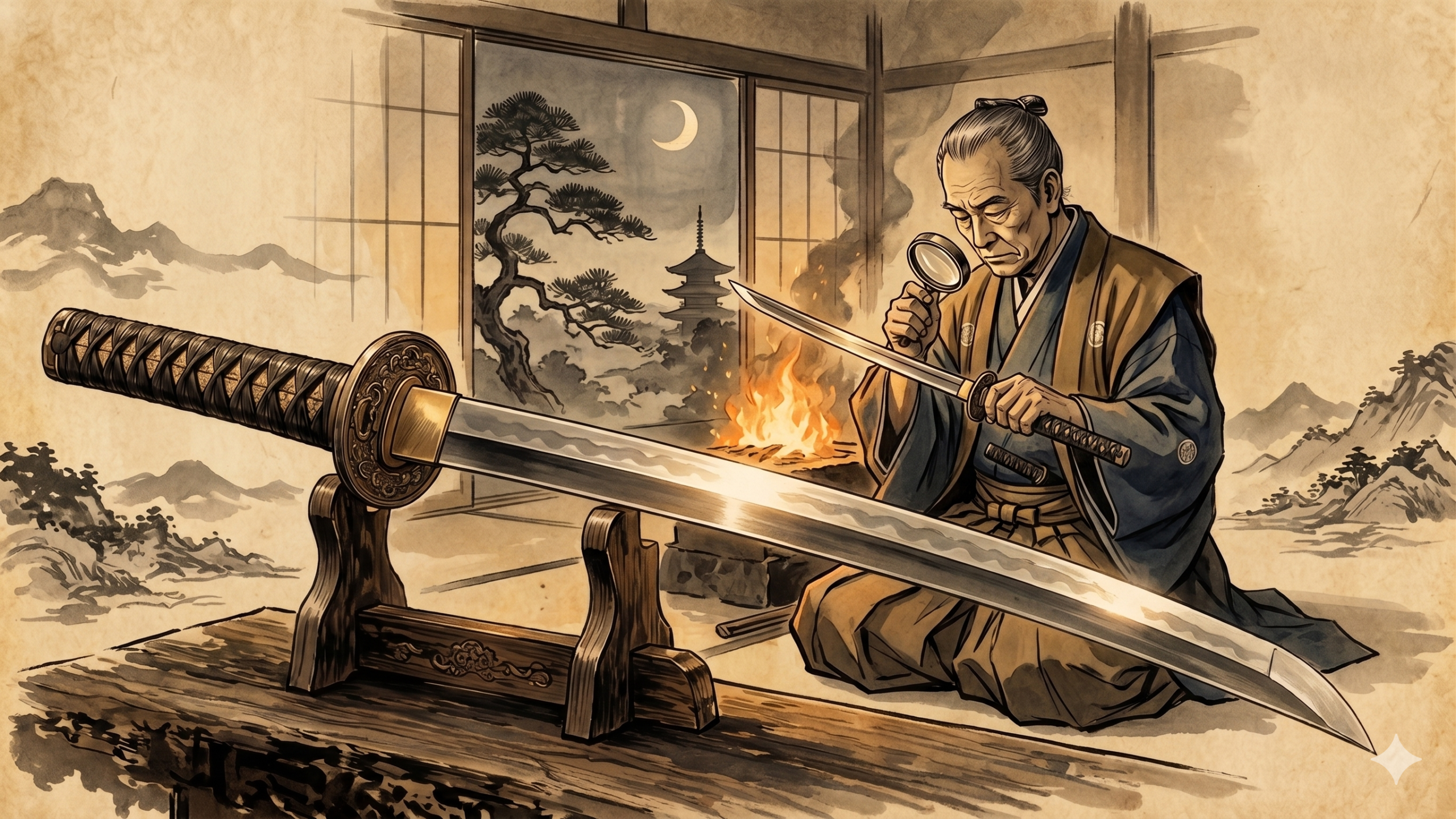
Why Collectors Obsess Over the Kiyomaro Sword
In the world of Japanese swords, few names ignite as much passion—and as much debate—as Minamoto Kiyomaro. A swordsmith who lived fast, forged brilliantly, and died tragically young, Kiyomaro occupies a singular place in nihonto history. His blades are among the most coveted of the entire shinshintō era, rivaling works produced centuries earlier during the golden age of Japanese sword-making. But what exactly makes a Kiyomaro sword so extraordinary? And why do collectors and scholars continue to regard him as perhaps the greatest genius of late Edo-period sword-making?
Who Was Minamoto Kiyomaro?
Born Yamaura Kanjūrō in 1813 in Shinano Province (modern-day Nagano Prefecture), the man who would become known as Kiyomaro came from humble origins. He left his rural home as a young man and eventually made his way to Edo, where he immersed himself in the study of classical sword-making traditions. What set him apart from his contemporaries was an almost obsessive dedication to reviving the Sōshū tradition—the legendary forging lineage associated with Masamune and his disciples from the Kamakura and Nanbokuchō periods.
While most shinshintō smiths of the late Edo period were producing blades influenced by Bizen or Yamato traditions, Kiyomaro looked backward to the most technically demanding school of all. He didn’t merely imitate Sōshū works. He internalized their principles and expressed them through his own artistic vision, creating swords that many experts consider the pinnacle of the entire shinshintō movement.
The Forging Style That Redefined Shinshintō
Understanding why the Kiyomaro sword commands such reverence requires a closer look at his forging characteristics. Three elements define his work:
Nie-Deki Hamon: A Return to Brilliance
Kiyomaro’s hamon (temper line) is predominantly rendered in nie-deki—individual, visible martensite crystals that glitter along the hardening line like scattered stars. This was the hallmark of the great Sōshū masters, and achieving it consistently demanded extraordinary skill in heat treatment. His hamon patterns are bold and dynamic, often featuring dramatic notare (undulating waves) and gunome (zigzag patterns) with brilliant sunagashi and kinsuji activity streaking through the tempered zone.
Jigane: Steel That Speaks
The surface steel of a Kiyomaro blade is typically a tight itame-hada (wood-grain pattern) mixed with mokume, exhibiting a clear and lustrous quality known as jinie. The steel appears alive—rich with chikei (dark lines in the ground metal) that give the surface a depth and luminosity rarely achieved by other shinshintō smiths. Collectors often describe the jigane of Kiyomaro’s best works as being indistinguishable in quality from the finest Kamakura-era blades.
Sugata: Commanding Presence
Kiyomaro’s blades tend toward a robust, powerful sugata (shape) that echoes the grandeur of Nanbokuchō-period tachi. The blades are often slightly wider than typical shinshintō works, with a moderate curve and a pronounced sense of strength. This physical presence, combined with his sophisticated metallurgy, gives each sword a commanding aesthetic that transcends its era.
A Troubled Life Behind the Masterworks
For all his genius at the forge, Kiyomaro’s personal life was marked by suffering. He struggled with poverty throughout most of his career, despite producing blades of extraordinary quality. Historical accounts describe a man who was fiercely uncompromising about his craft—he would destroy blades that didn’t meet his standards rather than sell inferior work. This perfectionism earned him respect but not wealth.
Kiyomaro also lived during one of the most turbulent periods in Japanese history. The late Edo period was defined by political upheaval, the arrival of Western powers, and the social unrest that would eventually topple the Tokugawa shogunate. He was connected to loyalist circles and the intellectual ferment of the sonnō jōi (revere the emperor, expel the barbarians) movement, which added further instability to an already precarious existence.
Tragically, Kiyomaro took his own life in 1854 at just 41 years old. The exact circumstances remain debated, but chronic illness, financial hardship, and personal demons all appear to have played a role. His early death meant a relatively small body of surviving work—which, of course, has only intensified the demand among collectors.
Rarity, Designations, and Market Value
The scarcity of Kiyomaro swords is a major factor in their desirability. Because his active forging career spanned roughly two decades and he famously destroyed blades he deemed unworthy, the total number of surviving works is quite limited. Among these, several have been designated as Jūyō Tōken (Important Sword) or higher by the NBTHK (Society for the Preservation of the Japanese Art Sword), and a handful have achieved Tokubetsu Jūyō status—an exceptionally elite classification.
At auction and in private sales, authenticated Kiyomaro blades routinely command prices that place them among the most expensive shinshintō swords in the world. A well-preserved katana with clear provenance can sell for tens of millions of yen, and competition among serious collectors is fierce.
The Kiyomaro School: A Legacy Beyond One Man
Kiyomaro’s influence extended beyond his own work. He trained a number of talented disciples who carried forward his Sōshū-revival approach, forming what is now referred to as the Kiyomaro School. Among the most notable were:
- Kiyondo (清人) — Kiyomaro’s younger brother, who continued forging in a closely related style after the master’s death and is highly regarded in his own right.
- Masayuki (正行) — A student who achieved considerable recognition and whose works sometimes appear alongside Kiyomaro’s in exhibitions and auction catalogs.
- Nobuhide (信秀) — Known for both blade-making and exceptional horimono (blade carvings), contributing an additional artistic dimension to the school’s legacy.
The horimono tradition within the Kiyomaro school deserves special mention. Engravers such as Honjo Yoshitane and Nobuhide produced carvings of remarkable delicacy and spiritual depth—dragons, Buddhist deities, and Sanskrit characters that transform already exceptional blades into multi-layered works of art.
Kiyomaro’s Place in Japanese Sword History
Kiyomaro is sometimes called the “Masamune of the Bakumatsu,” and while such comparisons are inherently imperfect, the sentiment captures something real. He represents a rare convergence of technical mastery, artistic ambition, and spiritual intensity. His swords are not mere weapons or decorative objects—they are expressions of a deeply personal quest to reach backward through centuries of tradition and bring something timeless into the present.
For modern collectors and enthusiasts, a Kiyomaro sword represents one of the highest aspirations in nihonto collecting. Owning one means possessing a piece of a story that encompasses artistic brilliance, historical turbulence, and profound human tragedy.
Where to Find Authentic Japanese Swords Today
Whether you’re drawn to the genius of Kiyomaro or exploring other periods and traditions in Japanese sword-making, building a meaningful collection starts with trusted sources. At Ifu, we offer a carefully curated selection of authentic Japanese swords—each one verified for quality, provenance, and historical significance—so collectors at every level can acquire blades with confidence.
The story of Kiyomaro reminds us that a great sword is never just steel and edge geometry. It is history made tangible—a conversation across centuries between the smith, the blade, and the person who holds it.