Why Choji Oil Is the Secret to Preserving Your Nihonto
If you own a Japanese sword, you already know it demands more than casual attention. A nihonto is a living artifact — forged in fire, tempered by centuries of tradition, and remarkably vulnerable to one invisible enemy: moisture. The single most important weapon in your maintenance arsenal isn’t a polishing stone or a display stand. It’s a small bottle of choji oil. Yet many collectors, especially those new to nihonto ownership, misunderstand what choji oil is, how to use it properly, and why substitutes can quietly destroy a blade worth thousands of dollars.
What Exactly Is Choji Oil?
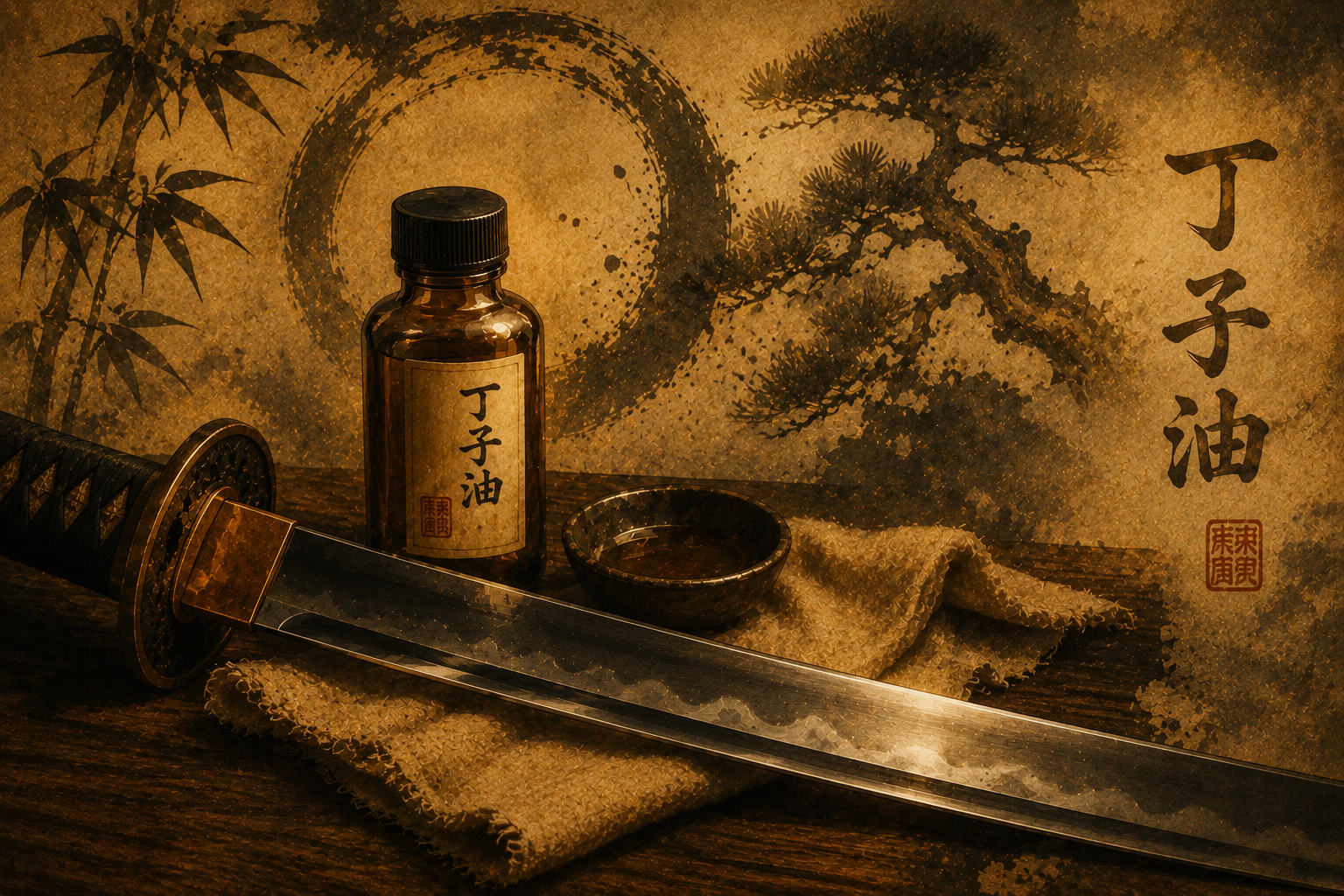
Choji oil — known in Japanese as chōji abura (丁子油) — is a refined mineral oil lightly scented with clove oil (chōji means “clove” in Japanese). The clove component is minimal, typically less than one percent, and serves a mostly traditional and aromatic purpose rather than a functional one. The heavy lifting is done by the mineral oil base, which creates a thin, protective barrier against oxidation and humidity on the blade’s surface.
For centuries, this simple formulation has been the standard for nihonto preservation. Japanese swordsmiths, polishers, and collectors have relied on choji oil not because it’s exotic, but because it works — gently, predictably, and without damaging the delicate hamon and hada that make each blade unique.
Choji Oil vs. Other Oils: Does It Really Matter?
This is one of the most debated questions in nihonto forums, and the answer is nuanced. Some experienced collectors use pure mineral oil or even medical-grade light machine oil with perfectly good results. Others swear by traditional choji oil purchased from Japanese suppliers. Here’s what matters:
- Avoid vegetable-based oils entirely. Olive oil, coconut oil, and other organic oils will oxidize, turn rancid, and leave a corrosive residue on the blade. This is a fast path to irreversible damage.
- Avoid silicone-based lubricants. They can leave a film that interferes with future polishing and may react unpredictably with the steel over time.
- Avoid WD-40 and similar penetrating sprays. These contain solvents and additives that are not designed for fine steel preservation and can harm the blade’s surface and fittings.
- Pure mineral oil is acceptable and essentially the same base used in commercial choji oil. If you choose this route, ensure it’s food-grade or pharmaceutical-grade with no additives.
- Authentic choji oil from a reputable Japanese supplier remains the gold standard — not because of magic properties, but because you know precisely what you’re putting on a blade that may be centuries old.
How to Apply Choji Oil: A Step-by-Step Guide
Proper oiling is part of a broader maintenance ritual that every nihonto owner should learn. The process is meditative, deliberate, and deeply connected to the Japanese philosophy of caring for objects with respect. Here’s how to do it correctly:
Step 1: Remove the Old Oil
Before applying fresh choji oil, you need to remove the previous layer. Traditionally, this is done using uchiko — a fine powder made from polishing stone material wrapped in a silk ball. Gently tap the uchiko along the flat of the blade to distribute a light dusting of powder, then wipe it away with a clean sheet of washi (Japanese rice paper) or a soft, lint-free cloth. Always wipe from the spine (mune) toward the edge (ha), never across the cutting edge, and never with your bare fingers on the blade surface. Skin oils contain salts and acids that cause rust surprisingly fast.
A note of caution: Uchiko is mildly abrasive. On older blades or those with a fine traditional polish, excessive uchiko use can gradually wear away the subtle surface work. Many modern conservators recommend minimizing uchiko use and instead removing old oil with soft washi or a microfiber cloth dampened very lightly with pure mineral oil.
Step 2: Apply Fresh Choji Oil
Place a few drops of choji oil onto a clean, soft cloth or a fresh piece of washi. You need far less than you think — a thin, nearly invisible film is ideal. Spread the oil evenly along both sides of the blade, covering the entire surface from kissaki (tip) to habaki (blade collar). Pay attention to the mune and the shinogi-ji (the flat area between the ridge line and the spine), as these areas are often neglected and vulnerable to spotting.
Step 3: Don’t Forget the Nakago
The nakago (tang) is generally left unpolished and carries the patina of age, which is historically significant and should never be cleaned or polished. However, a very light application of oil on the tang is appropriate if you live in a particularly humid climate. Be gentle — the goal is preservation, not saturation.
Step 4: Reassemble and Store Properly
After oiling, carefully return the blade to its saya (scabbard). Store the sword horizontally with the edge facing upward to prevent the oil from pooling against the cutting edge. Ideally, the storage environment should be cool and dry, with stable humidity levels between 40 and 60 percent.
How Often Should You Oil Your Nihonto?
There’s no single correct answer — it depends on your climate. In humid environments like coastal regions or during summer months, you may need to inspect and re-oil your blade every two to four weeks. In dry, climate-controlled interiors, once every two to three months is usually sufficient. The key practice is regular inspection: draw the blade periodically, examine it under good light for any signs of rust spotting or moisture, and re-oil as needed.
If you notice tiny orange or red spots forming, act immediately. Light surface rust can often be addressed by a professional polisher if caught early, but deep pitting is permanent and devastating to a blade’s value and beauty.
Common Mistakes Collectors Make with Choji Oil
- Using too much oil. A thick layer attracts dust and can seep into the saya, causing the wood to deteriorate and the interior to become a breeding ground for moisture.
- Touching the blade with bare hands. Even a brief fingerprint left uncleaned can etch into the steel within hours in humid conditions.
- Neglecting the routine. Display swords are not exempt. A blade behind glass still needs regular oiling, especially if the case isn’t climate-controlled.
- Using contaminated cloths. Always use fresh, clean materials. A cloth that touched another metal or cleaning agent can introduce contaminants to the blade surface.
Choji Oil as a Gateway to Deeper Nihonto Appreciation
There’s something profoundly respectful about the act of caring for a Japanese sword. The ritual of maintenance connects you to generations of warriors, artisans, and collectors who performed the same motions with the same materials. Choji oil isn’t just a preservative — it’s a tradition. When you sit down with your blade, your oil, and your washi, you’re participating in a practice that stretches back centuries.
For collectors seeking authentic nihonto that deserve this level of care, Ifu offers a curated selection of genuine Japanese swords, each chosen for quality, provenance, and the enduring artistry of traditional swordsmithing.
Final Thoughts
Choji oil is simple, inexpensive, and irreplaceable. No amount of money spent on a fine blade matters if you neglect the ten minutes of maintenance that keeps it alive. Master the basics — the right oil, the right technique, the right frequency — and your nihonto will reward you with centuries more of beauty. Neglect them, and rust will do in weeks what time alone couldn’t do in four hundred years.