The Kanefusa Sword: 800 Years of Blade-Making Mastery
Few names in Japanese sword history carry as much weight as Kanefusa. Spanning over 800 years and more than 25 generations of master swordsmiths, the Kanefusa lineage represents one of the longest unbroken traditions in blade-making anywhere in the world. Whether you’re a seasoned collector or someone just beginning to explore the art of the katana, understanding the Kanefusa legacy is essential to appreciating what makes a truly exceptional Japanese sword.
Who Was Kanefusa? The Origins of a Legendary Lineage
The Kanefusa name traces its roots to the Mino Province, specifically the city of Seki in present-day Gifu Prefecture. Seki has been renowned as a center of sword production since the Kamakura period (1185–1333), and the Kanefusa school emerged as one of its most distinguished traditions. The earliest Kanefusa smiths worked during an era when swordsmiths were not merely craftsmen but artists whose creations carried spiritual significance.
The founding generations of Kanefusa smiths established a reputation for producing blades that balanced exceptional cutting ability with striking visual beauty. Their work fell under the broader Mino tradition (Mino-den), one of the five main schools of Japanese sword-making, known for practical, battle-ready blades with distinctive tempering patterns.
The Mino Tradition and Kanefusa’s Place Within It
To truly appreciate a Kanefusa sword, it helps to understand the Mino tradition that shaped it. Unlike the more flamboyant Bizen or Soshu traditions, Mino-den blades were prized for their functionality. Samurai who needed swords that would perform reliably in combat gravitated toward Mino blades, and Kanefusa smiths were among the most sought-after producers.
Key Characteristics of Kanefusa Blades
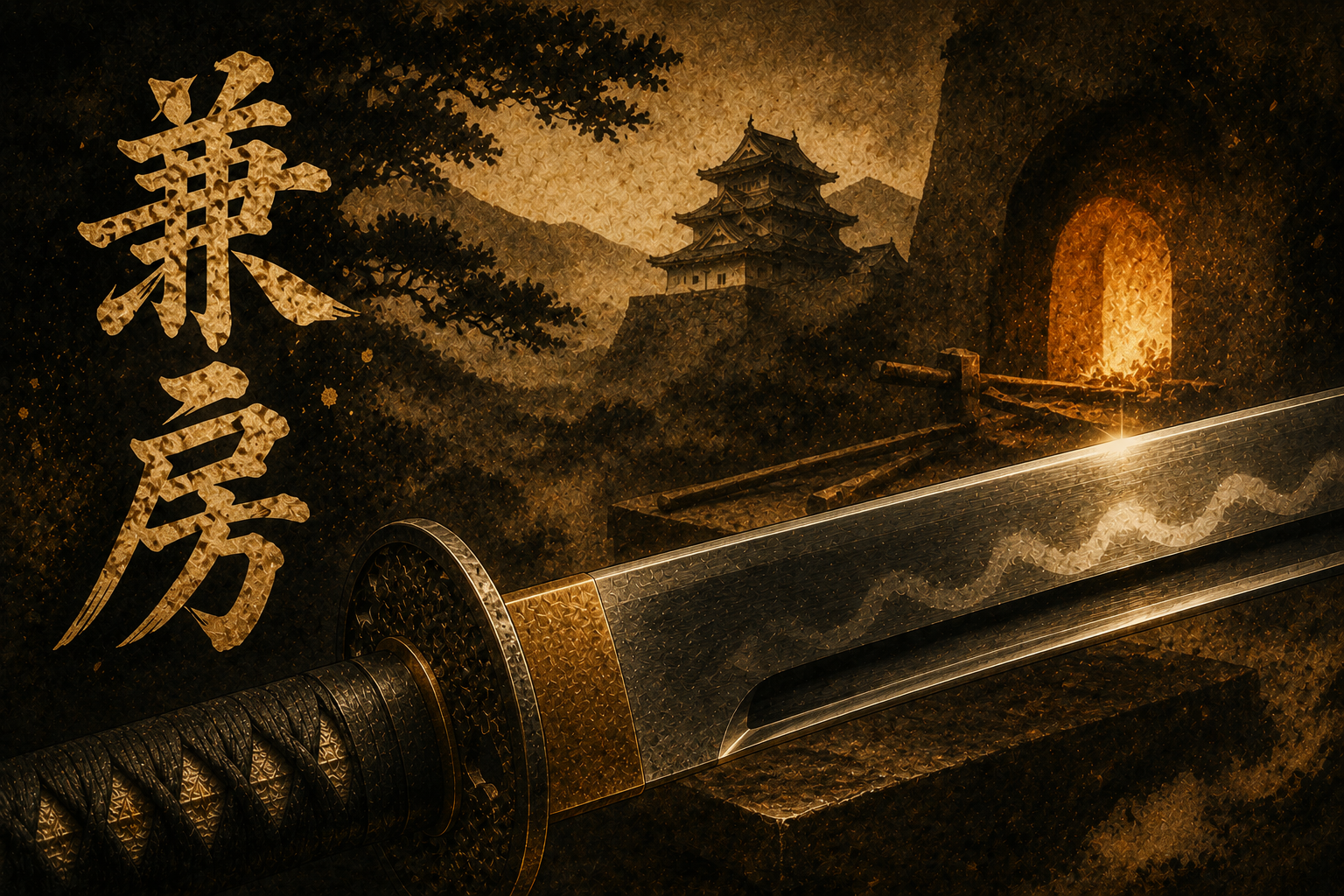
- Hamon (tempering pattern): Kanefusa swords often feature a togari-ba or gunome-midare pattern — sharp, pointed or irregular undulating waves along the edge that are both beautiful and indicative of superior heat treatment.
- Jigane (steel surface): The steel typically exhibits a tight, refined grain pattern known as ko-mokume, reflecting the meticulous folding and forging techniques passed through the generations.
- Sugata (shape): Kanefusa katana tend to feature a balanced curvature and proportions that feel natural in the hand, reflecting the Mino emphasis on practical swordsmanship.
- Tang inscription: Authentic Kanefusa blades bear the signature “Fujiwara Kanefusa” on the nakago (tang), often accompanied by the generation number, date, and sometimes the location of production — typically “Noshu Seki ju” (residing in Seki, Mino Province).
Kanefusa Through the Centuries: From Warring States to Modern Era
The Kanefusa lineage has weathered every major upheaval in Japanese history. During the Sengoku period (1467–1615), when Japan was torn by civil war, demand for Mino blades surged. Kanefusa swords found their way into the hands of warriors across the country, and the family’s reputation grew accordingly.
When the Tokugawa shogunate brought peace to Japan, the role of the swordsmith shifted. Blades became symbols of status and artistry rather than instruments of warfare. The Kanefusa line adapted, producing increasingly refined swords that emphasized aesthetic beauty while maintaining the cutting performance that had always defined their work.
The Modern Kanefusa Generations
Perhaps the most remarkable aspect of the Kanefusa story is that it continues today. The lineage has now reached the 26th generation, making it one of the longest continuously active swordsmithing families in Japan. Modern Kanefusa smiths hold the title of officially licensed swordsmiths under Japan’s strict Cultural Affairs regulations, which limit production to preserve quality and tradition.
The 25th generation Fujiwara Kanefusa, for example, produced authenticated katana that are now sought by collectors worldwide. These modern blades are forged using traditional tamahagane steel and time-honored techniques, yet they represent a living art form rather than a mere reproduction of the past.
Kanefusa’s Influence Beyond Swords
The Kanefusa legacy has extended beyond katana into the world of high-quality kitchen knives. Members of the family have applied centuries of metallurgical knowledge to culinary blades, earning international acclaim. While these kitchen knives are remarkable in their own right, they serve as a testament to the versatility and depth of the family’s expertise — the soul of the swordsmith, as enthusiasts often say, lives on in every blade that bears the name.
Collecting Kanefusa Swords: What to Look For
For collectors interested in acquiring a Kanefusa sword, whether antique or modern, there are several important considerations:
Authentication and Certification
Antique Kanefusa blades should ideally come with certification from recognized appraisal bodies such as the NBTHK (Nihon Bijutsu Token Hozon Kyokai). Certificates like Tokubetsu Hozon (Especially Worthy of Preservation) or Hozon (Worthy of Preservation) provide assurance of authenticity and quality. The NTHK (Nihon Token Hozon Kai) also issues respected Kanteisho appraisal certificates.
Condition and Provenance
As with any antique sword, the condition of the blade, the quality of the polish, and the completeness of fittings all affect value. A Kanefusa katana with original koshirae (mountings) in good condition is particularly desirable. Provenance — a documented history of ownership — adds further value and interest.
Generation Matters
Different generations of Kanefusa smiths are valued differently by collectors. Early generations from the Muromachi period are considered the most historically significant, while later Edo-period and modern examples are typically more accessible in both availability and price. Each generation, however, reflects the accumulated knowledge and skill of its predecessors.
Why the Kanefusa Name Endures
In a world where few crafts survive more than a handful of generations, the Kanefusa lineage stands as a monument to dedication, discipline, and the relentless pursuit of perfection. Each blade produced under this name carries not just the skill of its individual maker, but the weight of over eight centuries of tradition.
For collectors and enthusiasts seeking authentic Japanese swords that embody this kind of heritage, trusted sources are essential. At Ifu, we offer carefully curated, high-quality authentic Japanese swords for those who appreciate the artistry and history behind every blade.
Whether you are drawn to the Kanefusa name for its historical significance, its artistic beauty, or its remarkable continuity across the centuries, owning one of these blades means holding a tangible connection to one of Japan’s greatest craft traditions — a tradition that, remarkably, is still alive today.