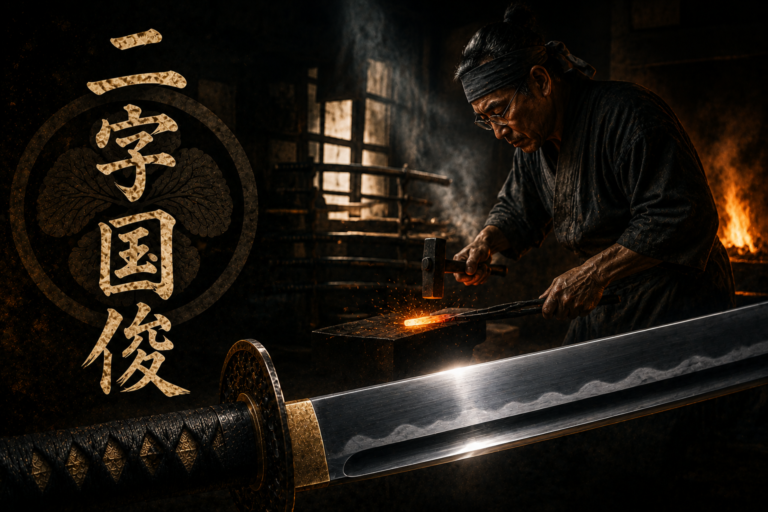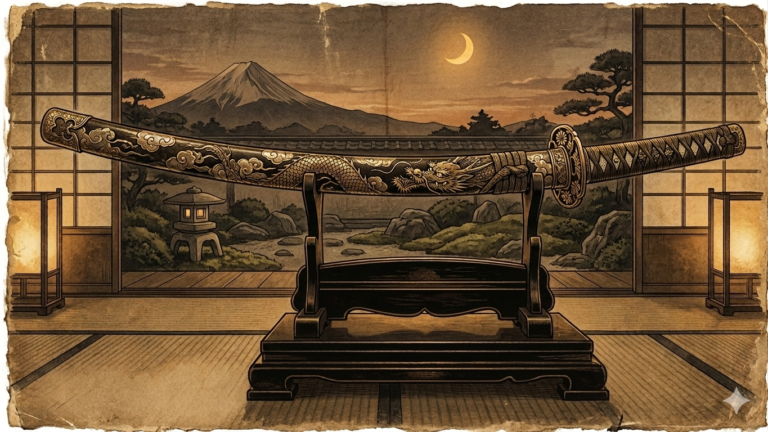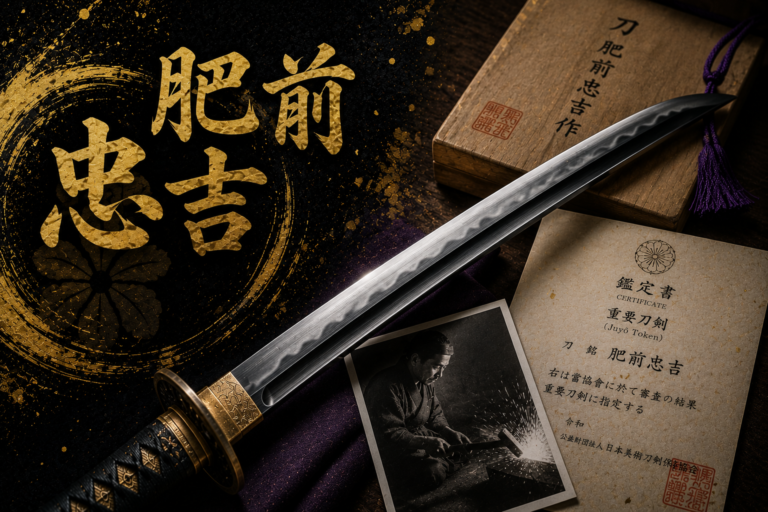
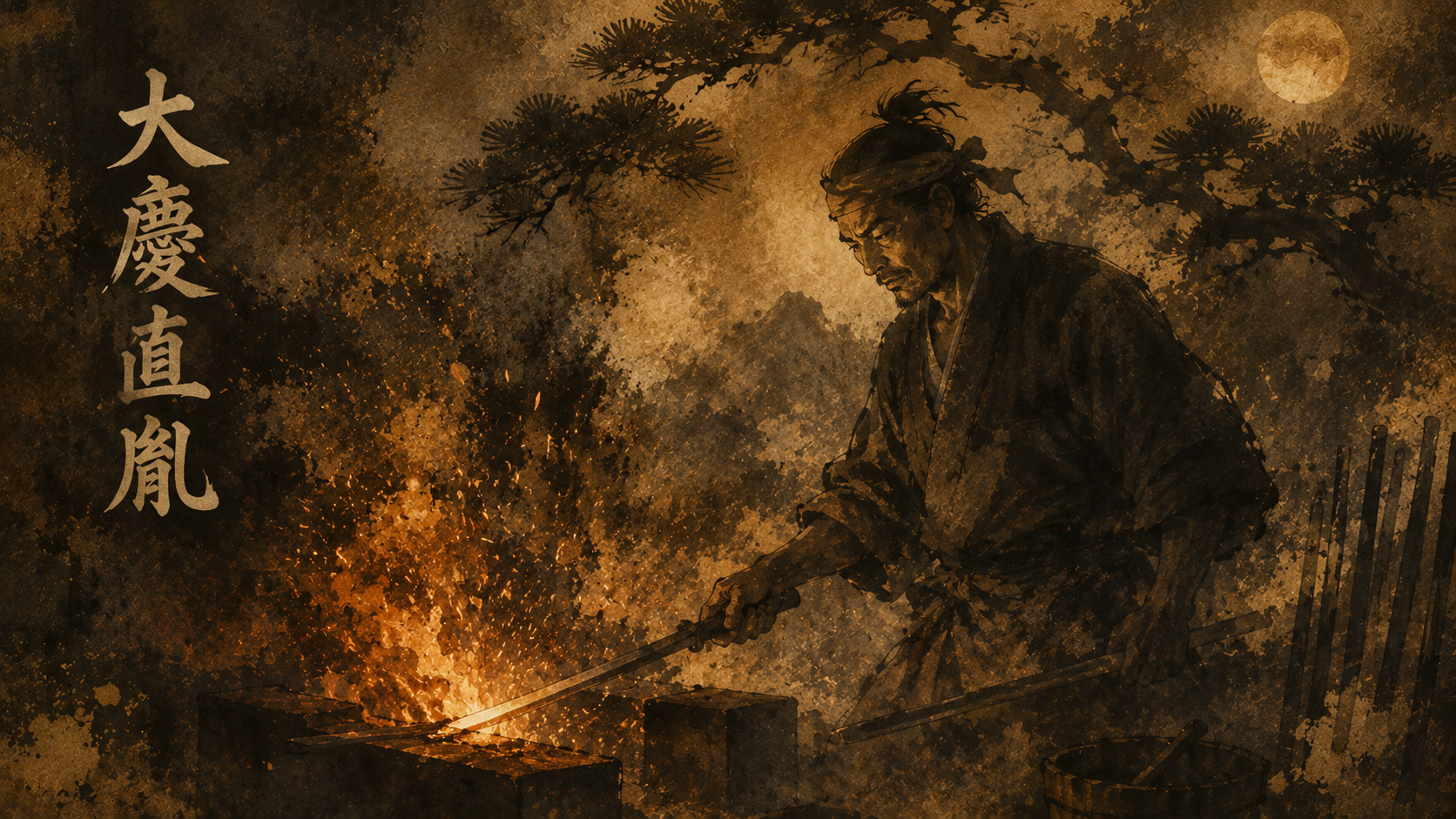
Taikei Naotane: The Greatest Swordsmith of the Shinshintō Era
In the long and storied history of Japanese sword making, few names command as much reverence as Taikei Naotane. Active during the late Edo period, Naotane is widely regarded as the finest swordsmith of the Shinshintō (new-new sword) era — a period defined by an ambitious movement to revive the forging techniques and aesthetic ideals of Japan’s golden age of sword making. His blades are treasured by collectors and institutions worldwide, and his legacy remains a cornerstone of katana scholarship. Understanding Naotane is essential for anyone with a serious interest in Japanese swords.
The Shinshintō Revival Movement: Context for Naotane’s Genius
To fully appreciate Taikei Naotane, one must first understand the era in which he worked. By the late 18th century, Japanese sword making had entered a period of relative stagnation. The blades of the Shintō (new sword) period, while technically competent, were often criticized for lacking the depth, beauty, and martial spirit of the Kotō (old sword) masterpieces forged during the Kamakura and Nanbokuchō periods — eras considered the zenith of the craft.
A growing dissatisfaction with this state of affairs gave rise to the Shinshintō revival movement, which sought to study and replicate the lost techniques of the old masters. This was not merely nostalgic romanticism; it was a rigorous, scholarly pursuit that combined metallurgical experimentation with deep historical research. The movement attracted some of the most talented and intellectually curious smiths of the age, and it produced blades of extraordinary quality.
Suishinshi Masahide: The Theorist Who Paved the Way
The intellectual godfather of the Shinshintō movement was Suishinshi Masahide (1750–1825). A prolific writer and influential teacher, Masahide argued passionately that smiths should abandon the conventions of the Shintō period and instead look back to the Kotō masters for inspiration. He published treatises analyzing the characteristics of old blades, advocated for specific forging methods, and trained a generation of students in his philosophy. While Masahide was himself a capable smith, his greatest contribution was arguably theoretical — he created the framework and momentum that made the revival possible.
Taikei Naotane: The Practical Apex of the Revival
If Suishinshi Masahide was the architect of the Shinshintō movement, then Taikei Naotane (1778–1857) was its master builder. Born Minamoto no Yoshiaki in Dewa Province (present-day Yamagata Prefecture), Naotane studied under Masahide and absorbed his teacher’s philosophy completely. But where Masahide excelled as a theorist, Naotane surpassed him — and arguably every other smith of the era — in the actual execution of the craft.
Naotane’s genius lay in his extraordinary versatility and technical mastery. He did not simply imitate one school or period. Instead, he demonstrated a remarkable ability to reproduce the styles of multiple Kotō traditions with astonishing fidelity. Whether working in the manner of the Bizen, Yamashiro, Sōshū, or Yamato traditions, Naotane achieved results that stunned his contemporaries and continue to impress modern connoisseurs.
Characteristics of Naotane’s Blades
Collectors and scholars prize Naotane’s work for several distinctive qualities:
- Exceptional jigane (steel surface): Naotane achieved a refined, tightly-forged steel surface that rivals the best Kotō work. His jihada (grain pattern) is typically beautifully visible, displaying rich variations of itame (wood-grain) and mokume (burl-grain) patterns depending on the style he was emulating.
- Masterful hamon (temper line): His hamon patterns are varied and sophisticated, ranging from elegant suguha (straight) lines in the Yamashiro style to bold, undulating midare and chōji (clove blossom) patterns inspired by the Bizen tradition. The nioiguchi (border of the hamon) is typically bright, clear, and well-defined.
- Versatility across traditions: Perhaps Naotane’s most celebrated attribute is his ability to work convincingly in the styles of different schools. This versatility was not superficial — his reproductions demonstrate a deep structural and aesthetic understanding of each tradition.
- Excellent sugata (shape): Naotane’s blades exhibit well-proportioned, elegant forms that reflect his study of classical sword geometry. Whether forging a katana, wakizashi, or tantō, his sense of balance and proportion is consistently refined.
- Distinctive mei (signature): Naotane signed his works with characteristic confidence. Many of his blades bear the signature “Taikei Naotane” along with a cursive monogram (kao). Some pieces also include dates and dedications that provide valuable historical context.
Notable Works and Institutional Collections
Naotane’s blades are held in major collections and museums around the world. The Walters Art Museum in Baltimore, for instance, includes works attributed to Naotane in its Japanese arms collection. His pieces regularly appear at prestigious auction houses such as Sotheby’s, where they command significant attention from serious collectors. A notable example is a wakizashi signed with his carved crescent moon mark and dated to the eighth month of 1808 (Bunka 5), which exemplifies the refined craftsmanship of his earlier career.
Several of his works have been designated as Jūyō Tōken (Important Swords) and Tokubetsu Jūyō Tōken (Especially Important Swords) by the Nihon Bijutsu Tōken Hozon Kyōkai (NBTHK), the foremost authority on Japanese sword appraisal. These designations confirm his standing among the elite swordsmiths in Japanese history.
Naotane’s Legacy and Lasting Influence
Taikei Naotane passed away in 1857, just over a decade before the Meiji Restoration would fundamentally transform Japanese society and bring the age of the samurai to a close. His death marked the end of the Shinshintō era’s greatest creative force, and while capable smiths continued to work in the years that followed, none achieved his combination of versatility, technical brilliance, and artistic depth.
Naotane’s legacy extends beyond the blades themselves. He proved that the techniques of the old masters were not irrevocably lost — that with sufficient skill, study, and dedication, a smith could bridge centuries of tradition and produce work worthy of the Kotō golden age. This philosophy continues to inspire modern swordsmiths who carry on the tradition of Japanese sword making today.
For collectors, a blade by Naotane represents one of the finest achievements of the Shinshintō period. Authentic examples are increasingly rare on the open market, and competition for well-preserved, properly papered pieces is intense. Provenance, condition, and NBTHK certification are critical factors in evaluating any Naotane blade.
Collecting Shinshintō and Naotane Blades Today
The market for Shinshintō-era swords has grown steadily as collectors recognize the extraordinary quality these blades represent. While acquiring an authentic Naotane sword requires patience, expertise, and considerable investment, the broader Shinshintō category offers opportunities for collectors at various levels. Understanding the historical context — the revival movement, the relationship between Masahide and Naotane, and the aesthetic goals of the period — is essential for making informed acquisitions.
Whether you are seeking a museum-quality masterpiece or beginning your journey into Japanese sword collecting, working with a knowledgeable and reputable dealer is paramount. At Ifu, we offer a curated selection of high-quality authentic Japanese swords, ensuring that every blade we present meets rigorous standards of authenticity and condition.
Taikei Naotane stands as proof that the art of the Japanese sword is not merely a relic of the distant past, but a living tradition capable of extraordinary renewal. His blades, forged with the ambition of bridging centuries, remain among the most compelling arguments for the katana as one of humanity’s supreme artistic and functional achievements.