Owning Antique Nihonto: A Complete Guide to Collecting Authentic Japanese Swords
There is something profoundly different about holding a blade that was forged centuries ago by a master craftsman whose name may still be etched into the tang. Owning antique nihonto is not merely a hobby or an investment — it is an act of preservation, a personal connection to one of the most refined metallurgical traditions in human history. Whether you are drawn to the artistry of a Kamakura-era tachi or the utilitarian elegance of a late Muromachi katana, this guide will help you understand what it truly means to become a custodian of these remarkable artifacts.
What Makes a Sword “Antique Nihonto”?
The term nihonto (日本刀) refers specifically to Japanese swords forged using traditional methods — the folding and differential hardening of tamahagane steel in a process that has remained fundamentally unchanged for over a thousand years. An antique nihonto is generally understood to be a blade made before the end of the Edo period (1868), though swords from the Meiji and Taishō eras are also collected. These are distinct from modern reproductions, decorative replicas, and even newly forged shinsakutō by living smiths.
What separates an antique nihonto from every other category of edged weapon is provenance and process. Each blade carries evidence of its maker’s hand — in the grain of the steel (jihada), the temper line (hamon), the shape (sugata), and the inscription on the tang (nakago). These are not merely decorative features; they are the fingerprints of history.
Why Collectors Choose Antique Nihonto Over Modern Blades
Historical Significance You Cannot Replicate
A custom-commissioned sword by a living smith can be exquisite. It can display masterful technique and flawless steel. What it cannot do is carry the weight of centuries. An antique nihonto may have been worn by a samurai during the Sengoku period, passed down through generations of a warrior family, or surrendered at the close of World War II. That history — sometimes documented, sometimes only hinted at by wear and patina — is irreplaceable.
Scarcity and the Nature of a Finite Supply
No new Kamakura-period blades will ever be made. The supply of antique nihonto only moves in one direction: downward. War, natural disasters, confiscation programs, neglect, and improper storage have claimed countless blades over the centuries. Every authenticated antique that survives is, in a real sense, a survivor. This scarcity underpins both the cultural and financial value of these swords.
The Beauty of Imperfection and Age
Collectors of antique nihonto learn to appreciate what the Japanese aesthetic tradition calls wabi-sabi — the beauty found in impermanence and imperfection. A blade that has been polished multiple times over five hundred years will have a thinner cross-section than it did when new. A tang will show centuries of oxidation. These are not flaws; they are the biography of the sword written in steel.
Understanding Certification and Authentication
One of the most critical aspects of owning antique nihonto is understanding the certification systems that validate authenticity, attribution, and quality. The two most widely recognized bodies are:
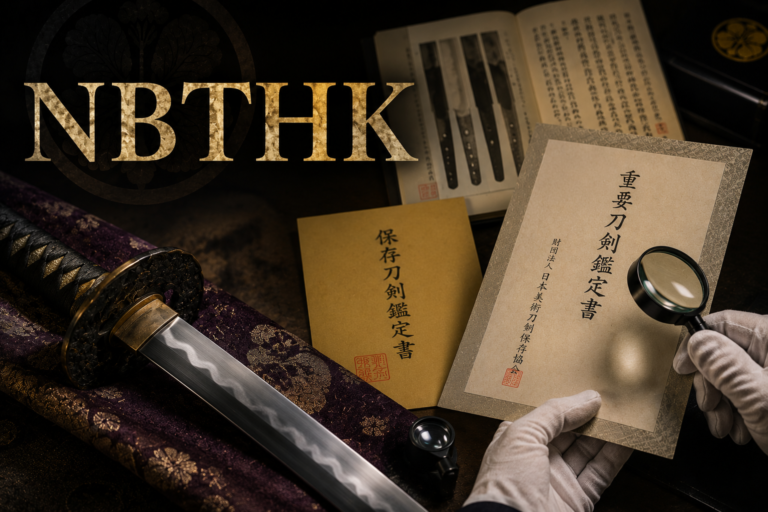
- NBTHK (Nihon Bijutsu Tōken Hozon Kyōkai): The Society for the Preservation of the Japan Art Sword issues papers ranging from Hozon (worthy of preservation) to Tokubetsu Jūyō (especially important). These papers authenticate a blade’s origin, school, and sometimes specific maker.
- NTHK (Nihon Tōken Hozon Kai): Another respected organization that conducts shinsa (examination) events and issues its own certification papers.
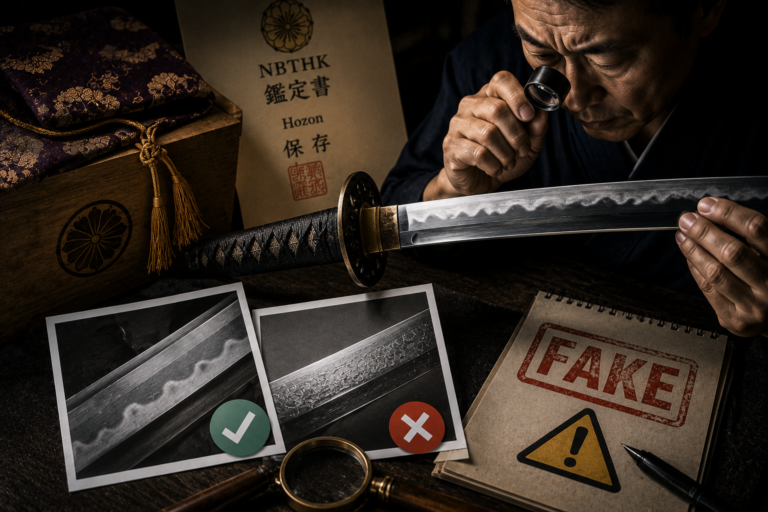
For any serious collector, purchasing a blade with recognized certification dramatically reduces risk and provides confidence in attribution. Unsigned blades (mumei) can still carry significant value when certified to a particular school or smith by expert judges. However, unpapered blades from unknown sources should be approached with caution, especially by newer collectors.
Legal Considerations for International Buyers
Owning antique nihonto involves navigating a patchwork of international laws. In Japan, traditionally made swords are classified as works of art and are registered with the Bunka-chō (Agency for Cultural Affairs). Export requires proper documentation. Blades designated as Jūyō Bunkazai (Important Cultural Property) or higher cannot legally leave Japan.
In most Western countries, antique swords are legal to own, but regulations vary. In the United Kingdom, for example, traditionally forged Japanese swords are exempt from the general ban on curved swords. In Australia, import permits are typically required. The United States is comparatively permissive, but buyers should still verify state and local ordinances. Always research the specific regulations in your jurisdiction before purchasing.
Caring for Your Antique Nihonto
Proper maintenance is not optional — it is a responsibility. An antique blade that has survived for hundreds of years can be ruined in a single season of neglect. The essential care routine includes:
- Regular oiling: A thin coat of chōji oil (clove oil) prevents rust and protects the polished surface.
- Proper storage: Blades should be stored horizontally in their shirasaya (plain wood storage scabbard) in a climate-controlled environment with moderate humidity.
- Handling etiquette: Never touch the blade with bare fingers. The acids in skin oils can cause irreversible staining within hours.
- Professional polishing: When a blade needs restoration, only a trained togishi (sword polisher) should perform the work. Amateur polishing destroys the steel’s surface structure and can erase centuries of character.
Investment Perspective: Does Antique Nihonto Hold Its Value?
Antique nihonto have shown strong value retention over the long term, particularly for blades with solid certification, clear provenance, and work by recognized smiths or schools. Blades with NBTHK Jūyō or Tokubetsu Hozon papers tend to appreciate steadily. The market for high-quality nihonto has become increasingly global, with collectors in North America, Europe, and across Asia competing for the best available pieces.
That said, nihonto should not be viewed purely as financial instruments. The market is specialized, liquidity can be limited, and condition issues can significantly affect resale value. The wisest approach is to buy what genuinely moves you, ensure it is properly authenticated, and take meticulous care of it. If you do that, both the personal and financial rewards tend to follow.
Building Your Collection: A Decision Framework
If you are considering your first antique nihonto, ask yourself these questions:
- What is my budget? Authentic antique nihonto can range from a few hundred dollars for modest unsigned wakizashi to hundreds of thousands for signed, papered masterworks. Set realistic expectations.
- What era or tradition interests me most? The bold geometry of Kamakura-era blades, the refined elegance of Shintō-period work, or the rugged practicality of Sengoku-era swords — each era has its character.
- Do I want a blade in polish or a restoration project? A freshly polished, papered blade costs more but delivers immediate enjoyment. A tired blade at a lower price can be rewarding if you budget for professional polishing.
- Am I buying from a reputable source? Established dealers with transparent return policies, detailed photography, and documented provenance are always preferable to anonymous online listings.
Where to Find Authentic Antique Nihonto
The most reliable sources for antique nihonto include specialized dealers in Japan and abroad, major auction houses, and established collector communities. Attending shinsa events and sword shows is an excellent way to handle blades in person and learn from experienced collectors. For those seeking authenticated, high-quality Japanese swords sourced with care, Ifu offers a curated selection of authentic nihonto with the transparency and expertise that serious collectors expect.
Final Thoughts: Stewardship, Not Just Ownership
Owning antique nihonto is ultimately an act of stewardship. These blades have already outlived their makers by centuries. With proper care, knowledge, and respect, they will outlive us as well — passed on to future generations who will marvel at the same grain patterns, the same temper lines, the same quiet perfection that draws us to them today. That continuity is perhaps the deepest reward of all.