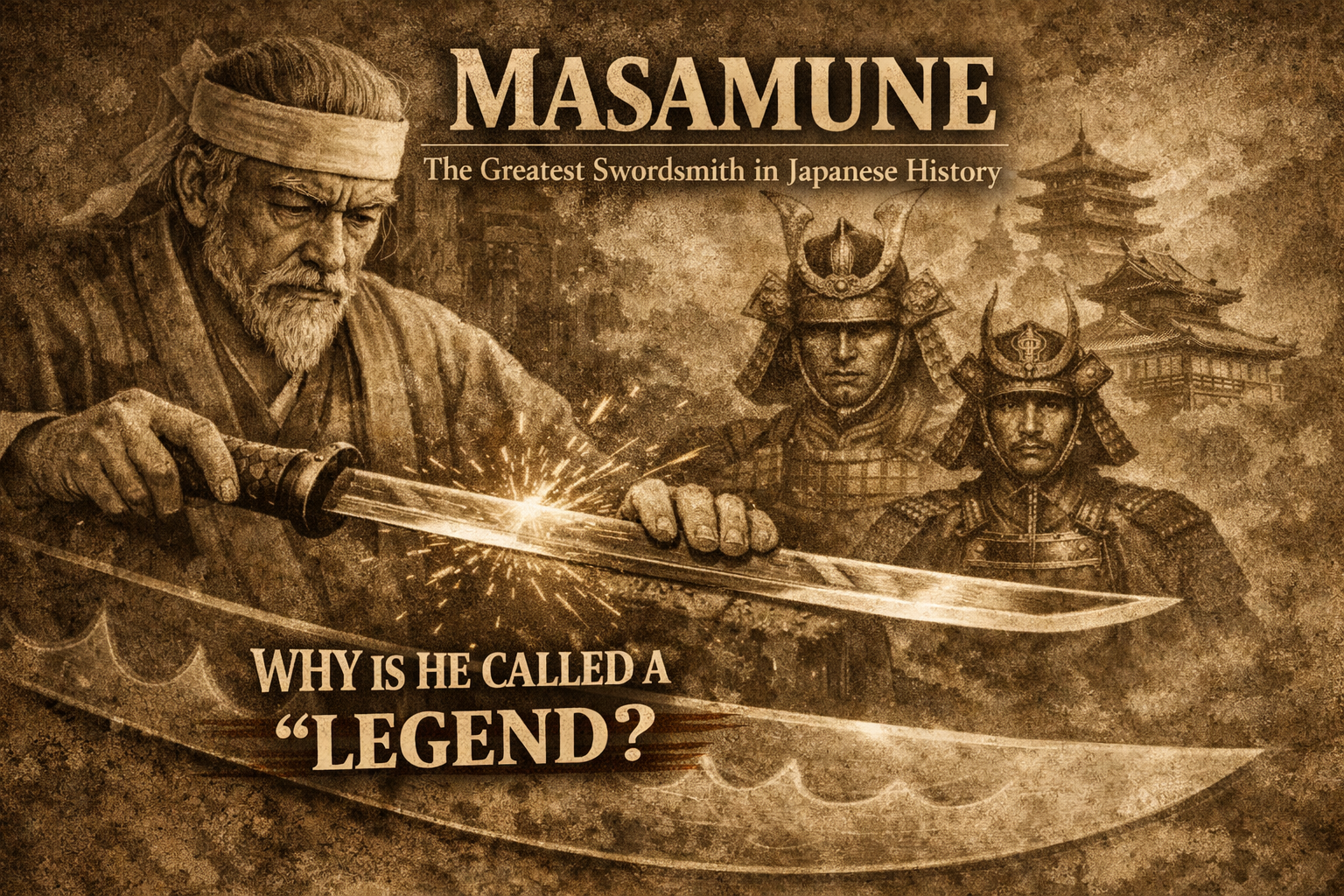
For us Japanese, the sound of the name “Masamune(正宗)” carries a resonance that goes far beyond a simple name. It evokes something mystical. Even as children, when we played with toy swords, “Masamune” was always the go-to name for the strongest blade in our imagination. Long before we ever opened a history textbook, we knew that this name held a certain “magic”—the magic of being the undisputed strongest.
In the real world of Japanese swords, this childhood intuition holds true: one name stands above all others. Masamune.
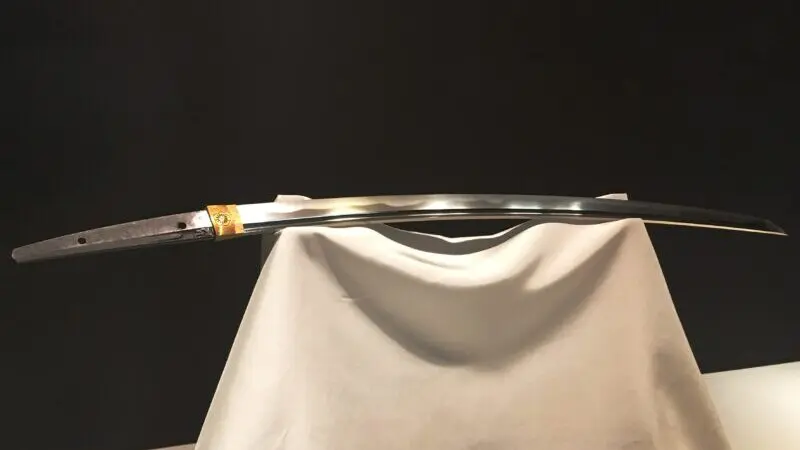
While fans of video games and anime worldwide recognize Masamune as the name of the ultimate weapon, the historical figure was far more than a simple craftsman. He was a visionary—a genius who blended advanced metallurgy with transcendent artistry to solve the physical limits of steel.
Why has Masamune remained at the “pinnacle” for over 700 years? To understand his legend, we must look beyond the blade and into the soul of the Japanese sword itself.
The High-Tech Innovator Who Solved the “Steel Paradox”
To appreciate Masamune, you must first understand the eternal dilemma of the sword. Steel faces a brutal contradiction: if it is high in carbon, it becomes hard but brittle (like glass), snapping upon impact. If it is low in carbon, it becomes tough but soft, bending easily after a single strike.
Before Masamune’s era in the late 13th century, samurai struggled with this “break or bend” reality. This became a crisis during the Mongol Invasions, where traditional Japanese blades often failed against the thick armor and mass-combat tactics of the invaders.
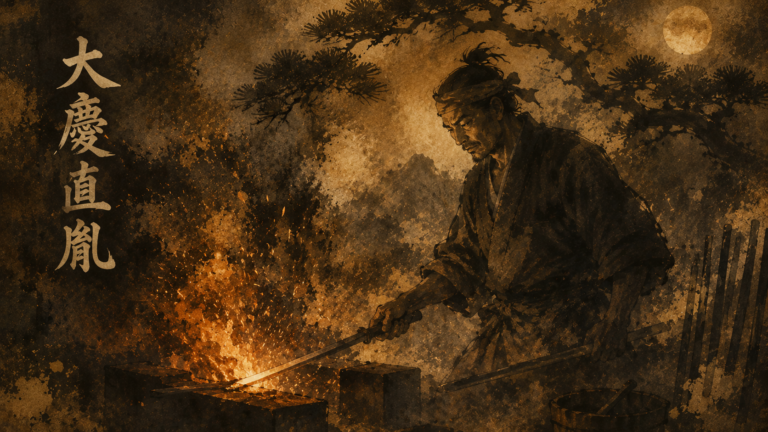
Masamune revolutionized the craft. He perfected a “layered structure,” folding together steels of varying carbon content with such precision that he achieved the impossible: a blade that was unbreakable, unbendable, and possessed a devastating cutting edge. He was, in essence, a medieval scientist controlling steel at a crystalline level.
“Nie(沸)” — A Galaxy Trapped in Steel
When experts appraise a sword, they look at the Hamon (刃文, the temper line). In Masamune’s work, this is where the magic happens.
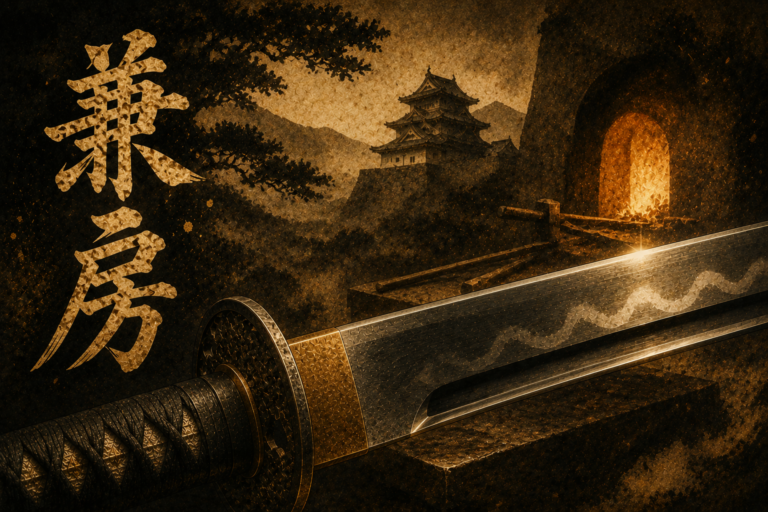
If you tilt a Masamune blade under the light, you will see countless shimmering, silver-like particles. This phenomenon is called “Nie.” While earlier swords featured simple, linear patterns, Masamune’s blades looked like pointillist paintings. The patterns resembled swirling mists, crashing waves, or the stars of the Milky Way.
He transformed a weapon of war into a masterpiece of spiritual art. This became the hallmark of the Soshu-den—the most powerful and flamboyant style of sword-making, which Masamune himself brought to perfection.
The Ultimate Status Symbol
In the Edo period, the Shogun and the most powerful Daimyo (大名, lords) treated Masamune blades as the “King of Gifts.” Owning a Masamune was not just about having a weapon; it was the ultimate proof of power and legitimacy.
Interestingly, many of his greatest masterpieces are “Mumei” (無銘, unsigned). While most smiths carved their names into the tang, Masamune’s work was considered so distinctive that it needed no signature. Appraisers of the time believed that the sheer quality and “aura” of the steel were enough to prove it was a Masamune. It was the ultimate “brand” that didn’t need a label.
The World’s Greatest Missing Treasure: The “Honjo Masamune(本庄正宗)”
The final piece of the Masamune legend is a mystery that remains unsolved to this day. The “Honjo Masamune” was the finest blade he ever forged and a National Treasure of Japan, passed down through the Tokugawa Shogunate for centuries.
However, following the end of World War II, the sword was surrendered to the US occupation forces during the “sword hunts.” After it was handed over to a soldier at a police station in 1946, it vanished. The finest sword in human history is still out there somewhere—perhaps in an attic in America or a dusty antique shop in Europe. This lingering mystery ensures that the name Masamune continues to haunt the imagination of collectors worldwide.
Conclusion: The North Star of the Samurai World
Masamune is a legend because the blades he forged in the 14th century have never been surpassed in beauty or strength. Even today, in the 21st century, he remains the gold standard.
If you are beginning your journey into the world of Katana, let Masamune be your North Star. The story of his steel, fire, and spirit is a gateway to the very heart of Japanese history.