Hello, everyone! I’m Ryo from Ifu. This time, I traveled to Kuching, Malaysia.
“A Japanese sword in Malaysia? Really?” You might be thinking that. But it’s true! Why is it there, and what kind of sword is it? I hope you enjoy finding out.
At the museum I visited, the swords of Borneo’s indigenous peoples, a sword from the era when British kings ruled the land, and Japanese military swords were all displayed under one roof. Join me as I guide you, through the eyes of a sword dealer, to a place where the blades of three cultures meet.
What Is Kuching Like?
A City on the Island of Borneo
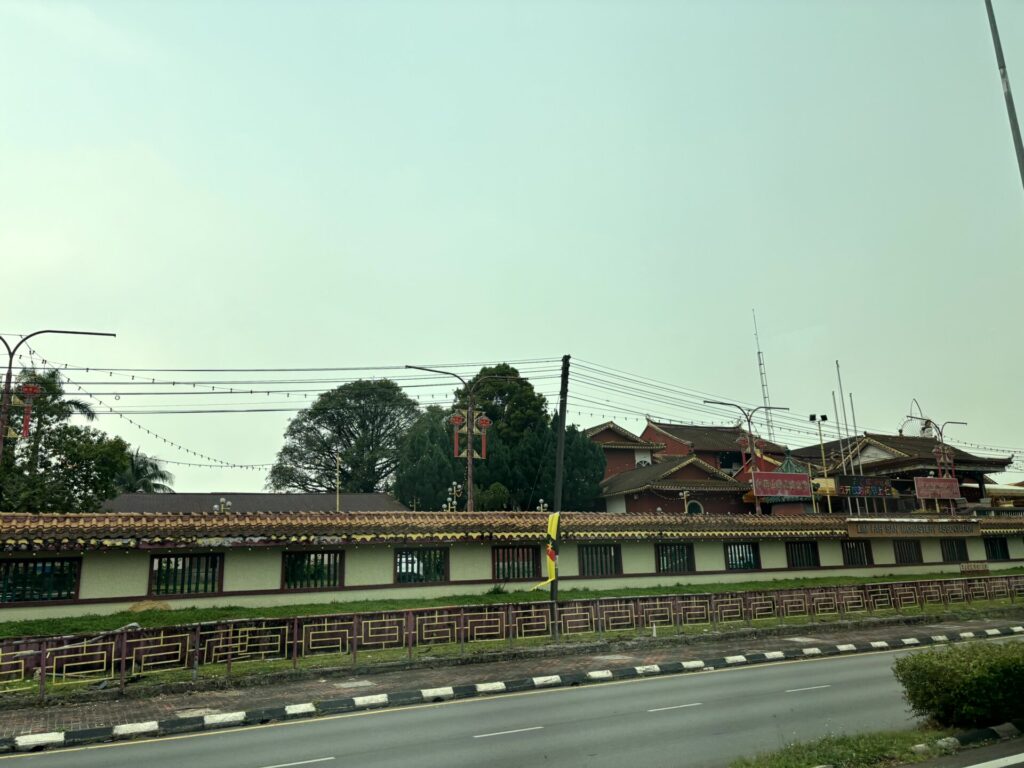
Kuching is the capital of Sarawak, a Malaysian state in the northwest of Borneo. Borneo is the third-largest island in the world and is shared by three countries: Malaysia, Indonesia, and Brunei. Spreading along the Sarawak River, the city has a relaxed atmosphere, quite different from Kuala Lumpur with its rows of skyscrapers.
Art Everywhere You Look
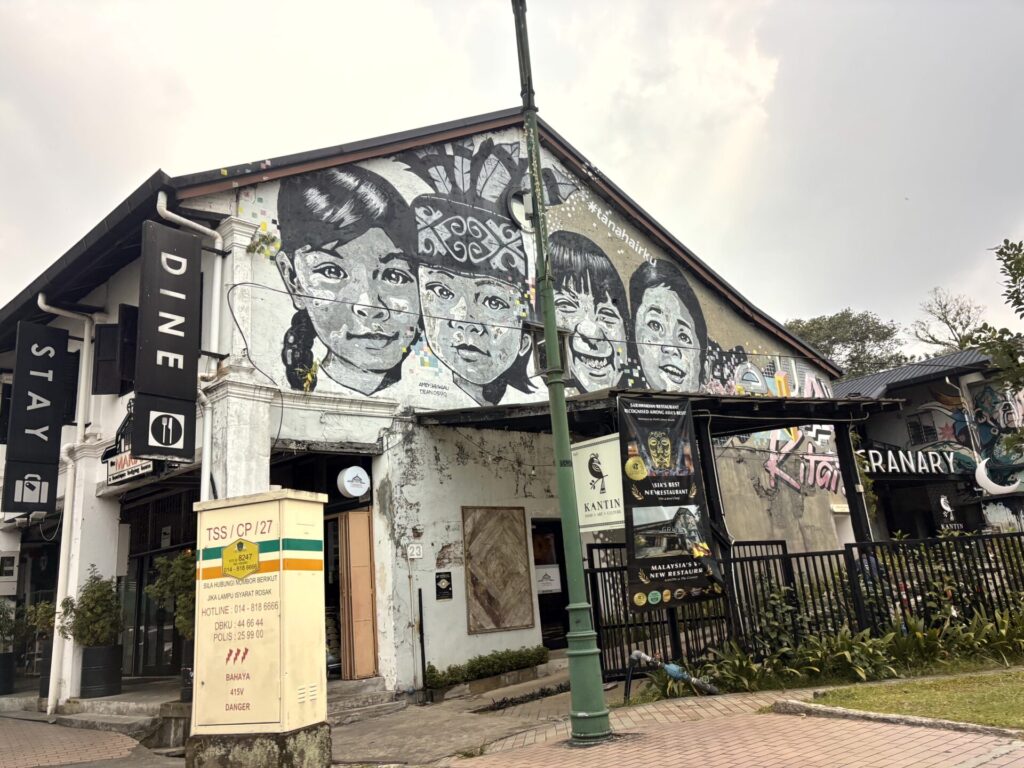
As you walk around the city, you’ll find charming murals painted on building walls here and there. It’s a city where just strolling around is a pleasure.
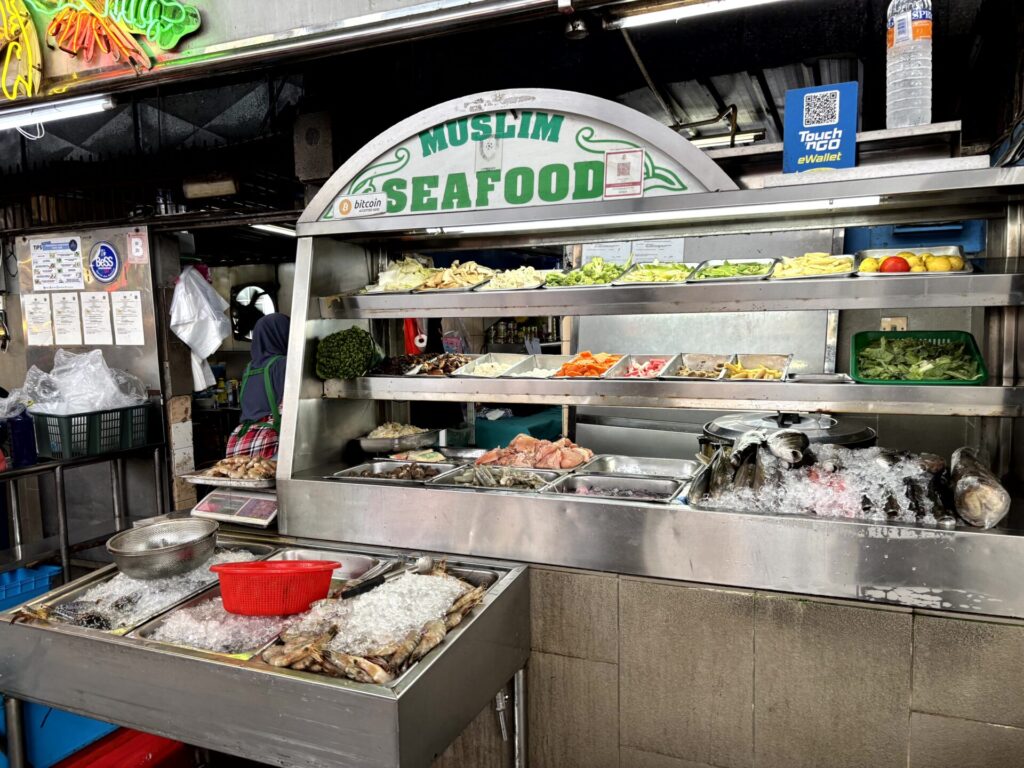
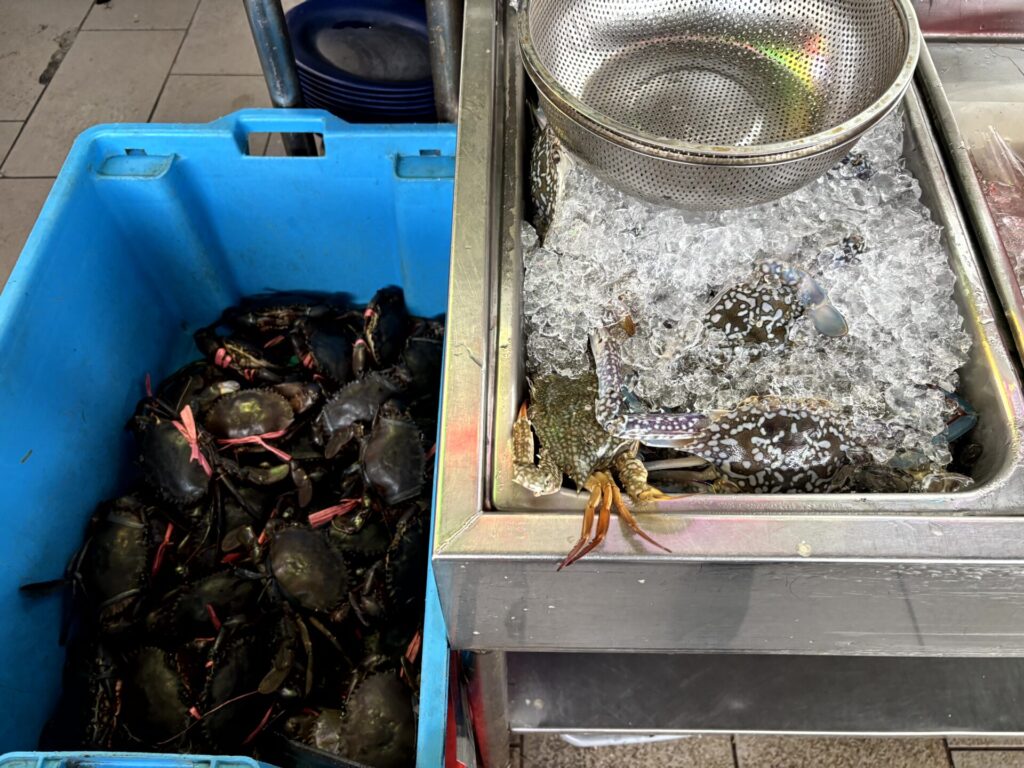
I couldn’t decide what to eat, but since the region is surrounded by the sea, I went with seafood. Malaysia is a country with many Muslims, so there is halal seafood too, and the restaurant proudly displayed a “Muslim Seafood” sign.
For a drink, I also went local and tried a fruit juice called kedondong. It was green, so to Japanese eyes it looked a bit like kiwi juice, but it had a slight tartness and was delicious.
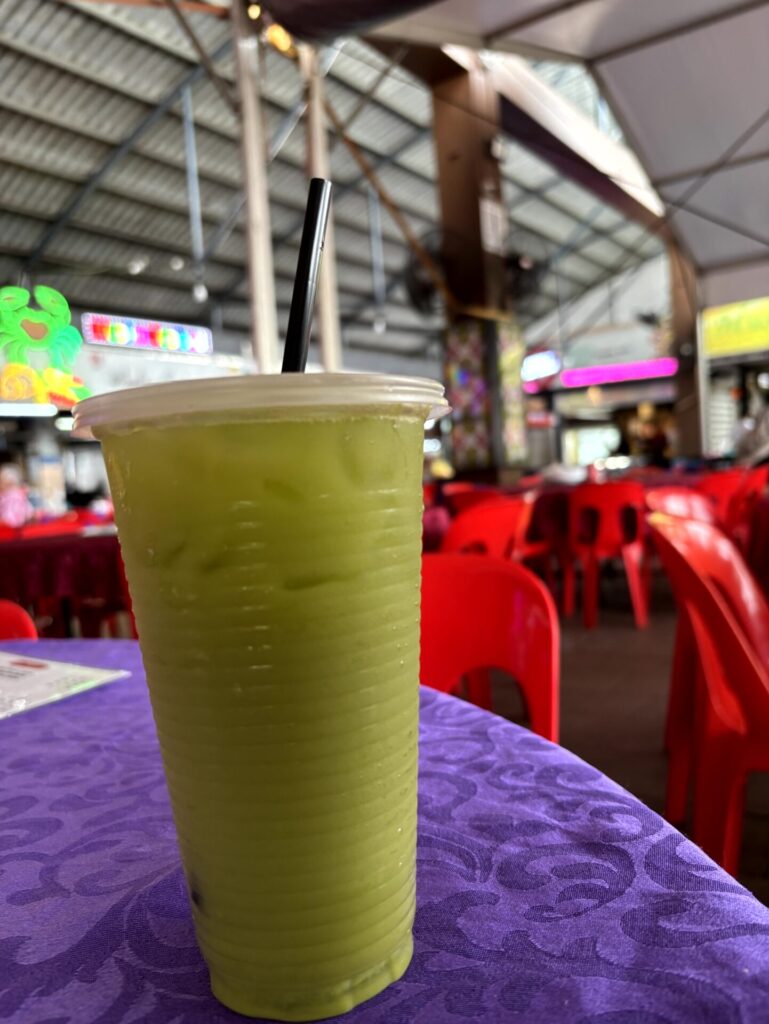
Both the food and the drink were delicious. I was completely satisfied.
The City of Cats
Kuching is also known as the “City of Cats.” In Malay, the word for cat is “kucing,” pronounced just like Kuching. There are various theories about the origin of the city’s name, but the locals clearly enjoy the connection, and you’ll find big cat statues on street corners. I passed right by one, but I was in a car, so I couldn’t get a good shot, haha.
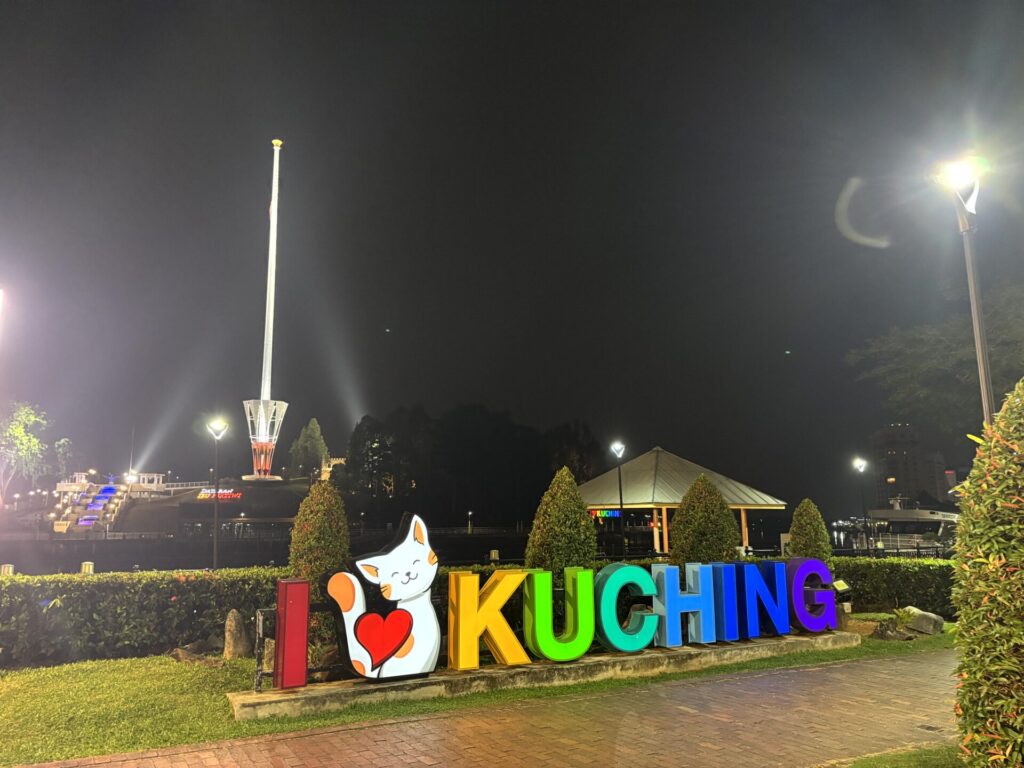
Instead, here’s this photo. Even on the “I love Kuching” monument, a cat is striking a proud pose.
A Visit to the Borneo Cultures Museum
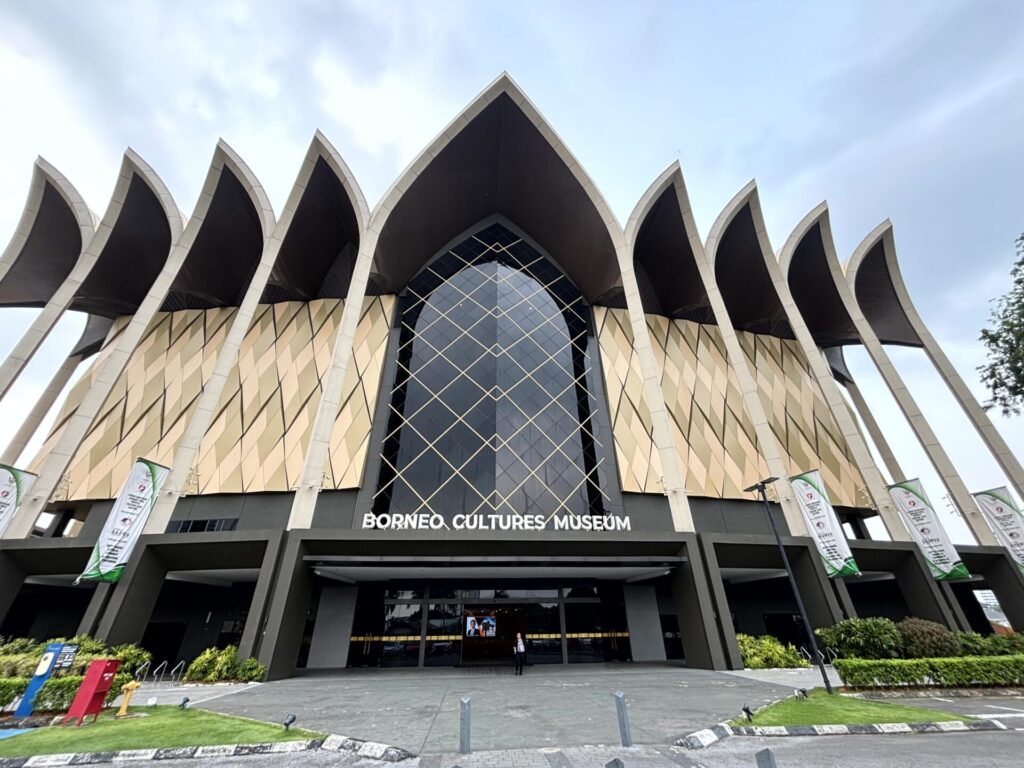
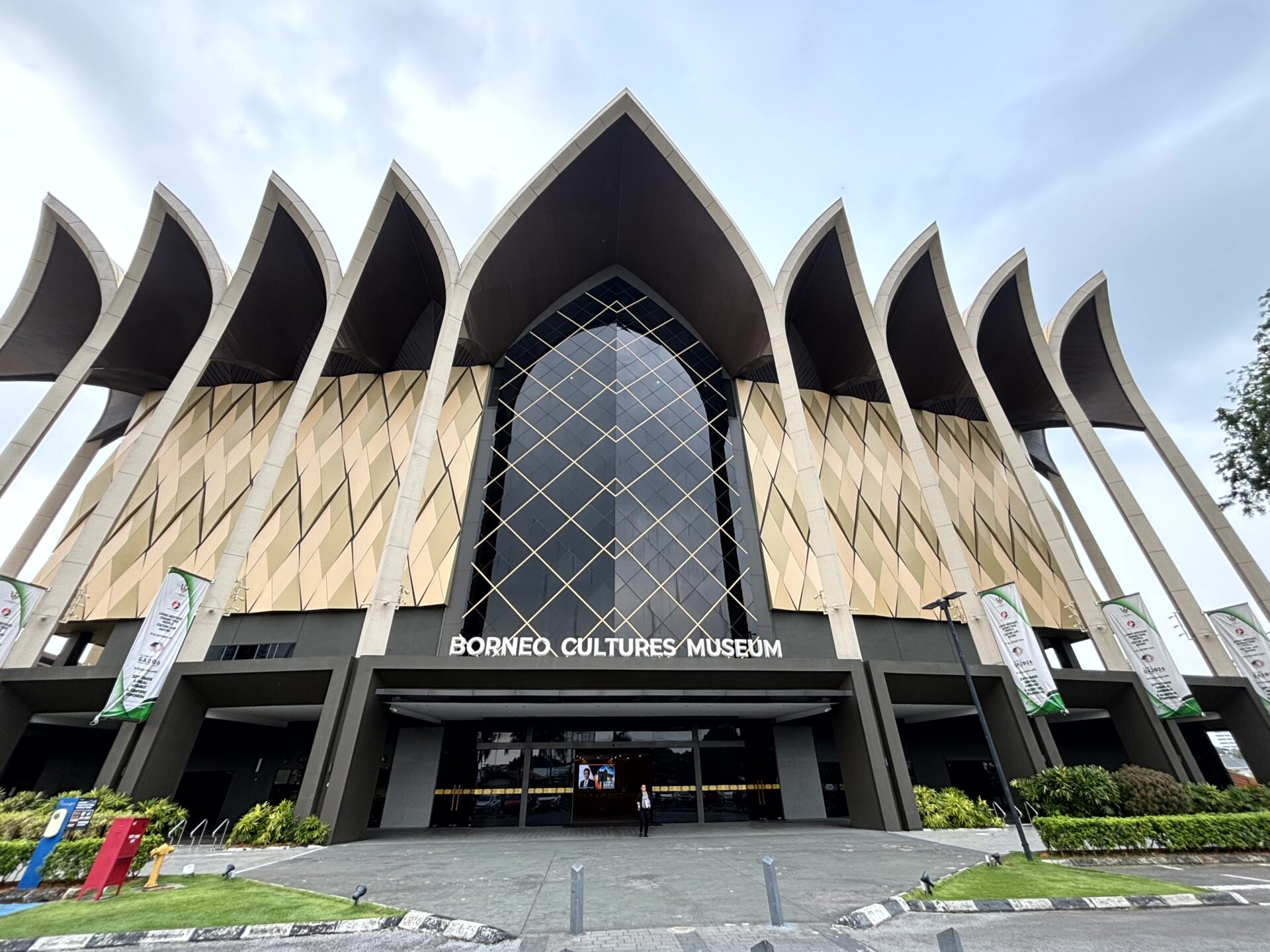
My destination this time was the Borneo Cultures Museum in central Kuching. It’s a new museum that opened in 2022 and is said to be one of the largest in Malaysia. Built around the vast collection of the Sarawak Museum, it lets you follow Borneo’s nature, the lives of its peoples, and its modern history floor by floor.
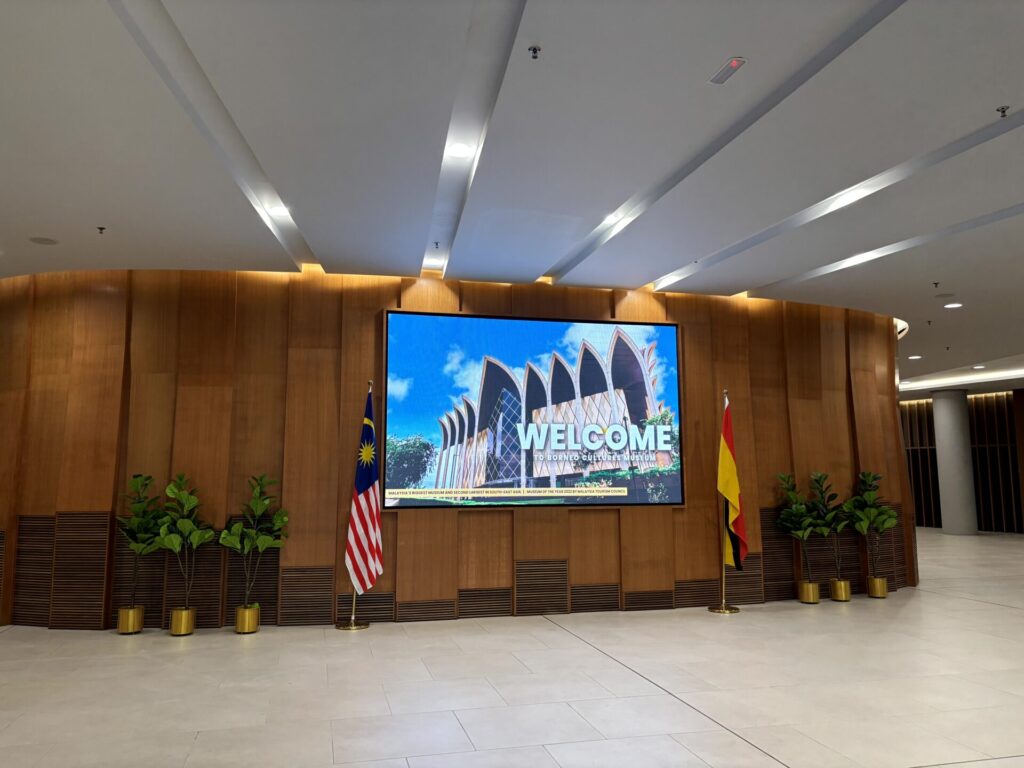
The building has five floors, but the main exhibitions start on the third floor. (The second floor is for kids.)
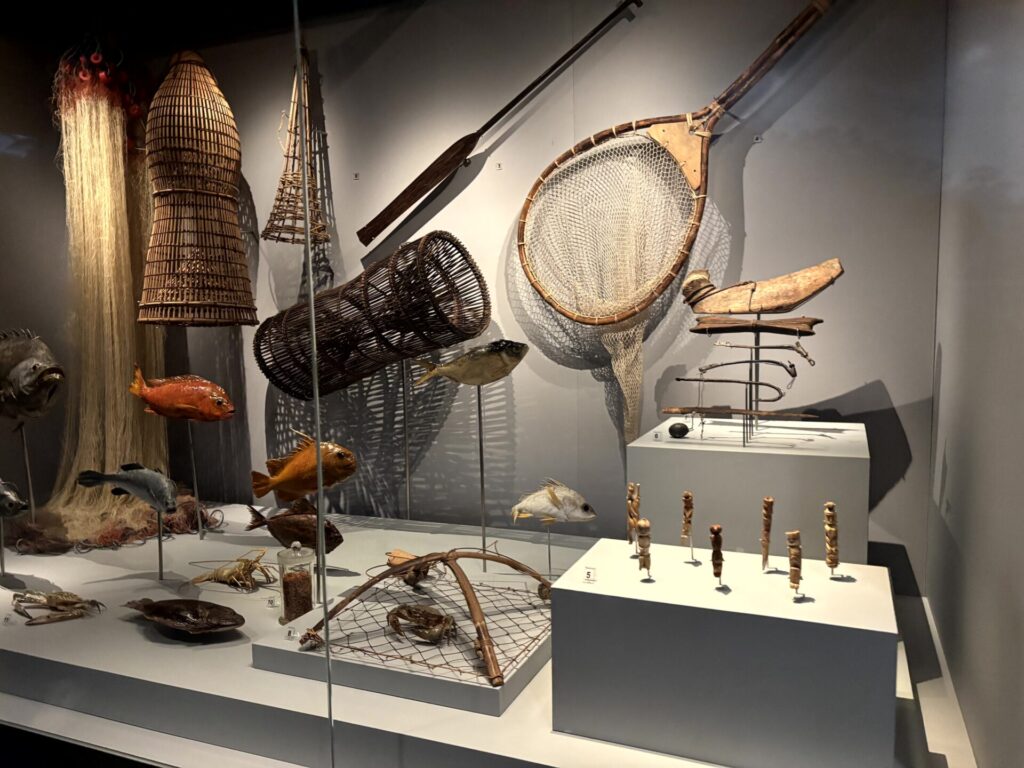
First up was life on the island. Since it’s surrounded by the sea, you can see that people have made their living by fishing since ancient times.
There were also exhibits on daily life, crafts, and nature, but as a sword dealer, of course what I really wanted to see were the weapons. So let’s take a look at the arms of the people of Borneo.
Swords and Armor of the People of Borneo
The Parang: Borneo’s Sword
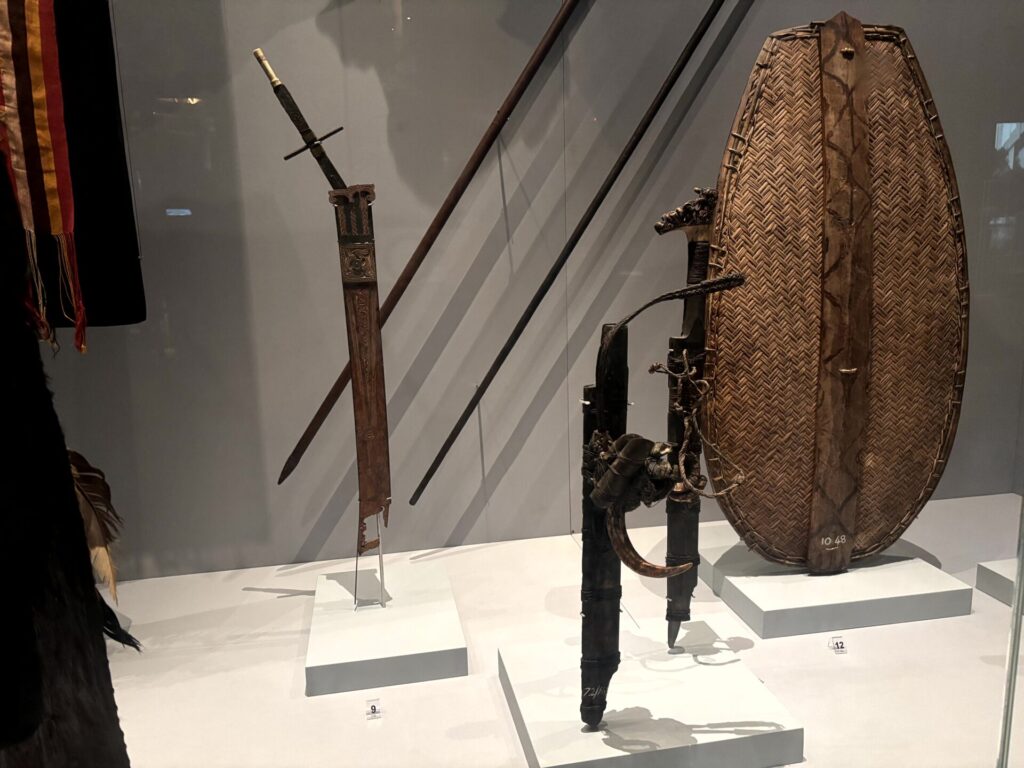
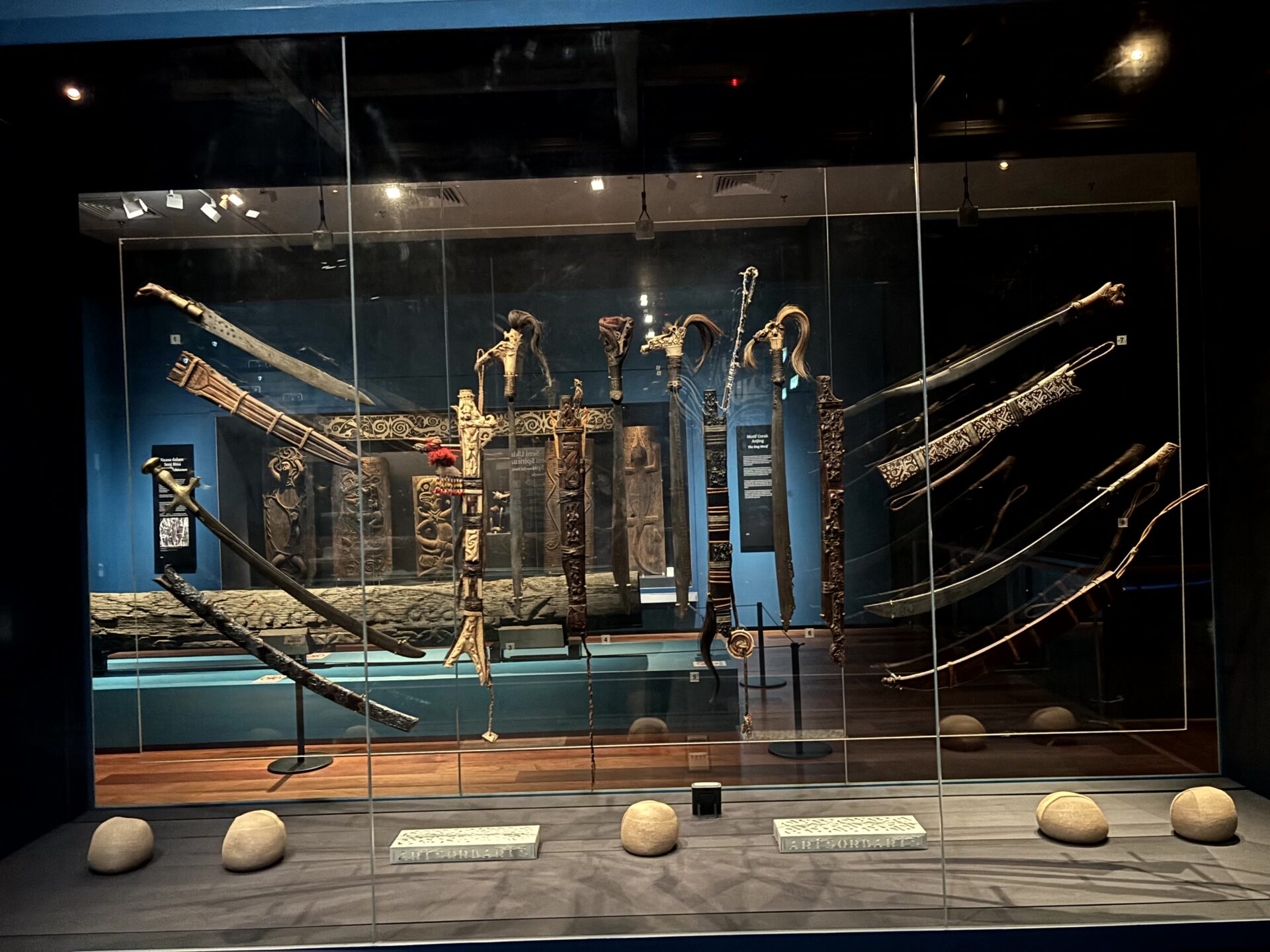
The first thing that caught my eye was the parang, the sword used by Borneo’s indigenous peoples. It was once used for headhunting, and today it is said to be used only by ritual specialists when necessary.
While the Japanese sword was refined as a two-handed “blade made for cutting,” the parang is shaped more like a one-handed machete. It was an everyday tool for clearing paths through the jungle, and it also served as a weapon. In Sengoku-period Japan, too, the spear was the main weapon on the battlefield, and a wakizashi or tanto (short sword or dagger) is said to have been used to take an enemy’s head after the fight. In that sense, the parang may have played a role similar to the wakizashi in Japan.
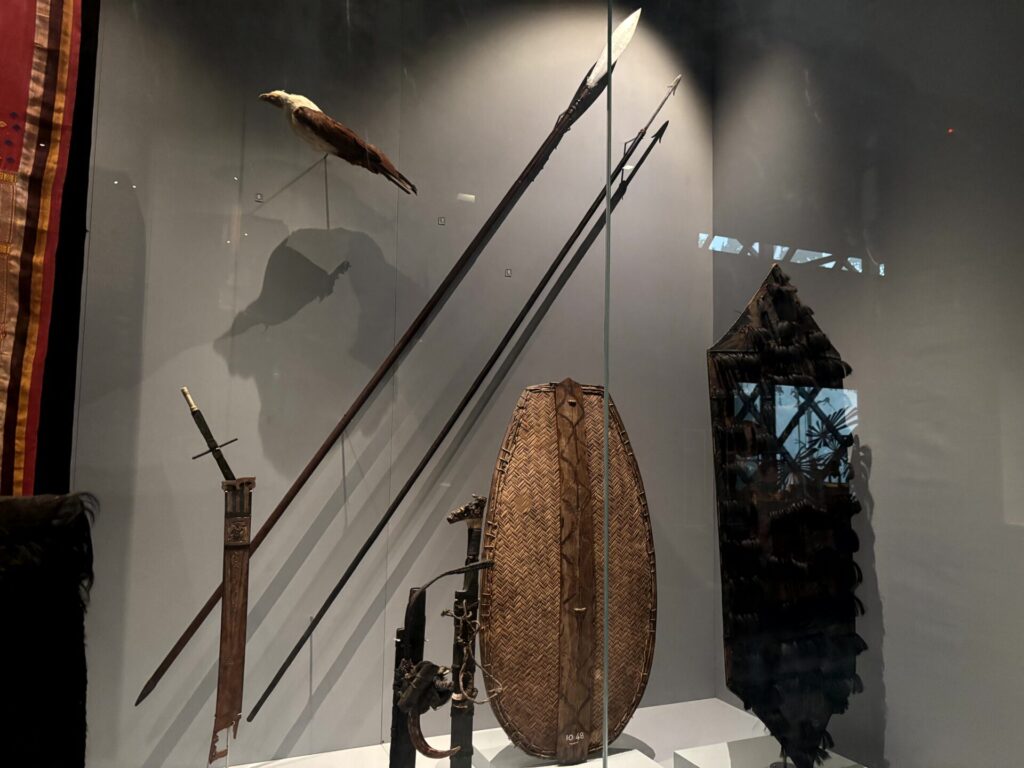
The main weapon in battle was the spear, which was displayed alongside the parang.
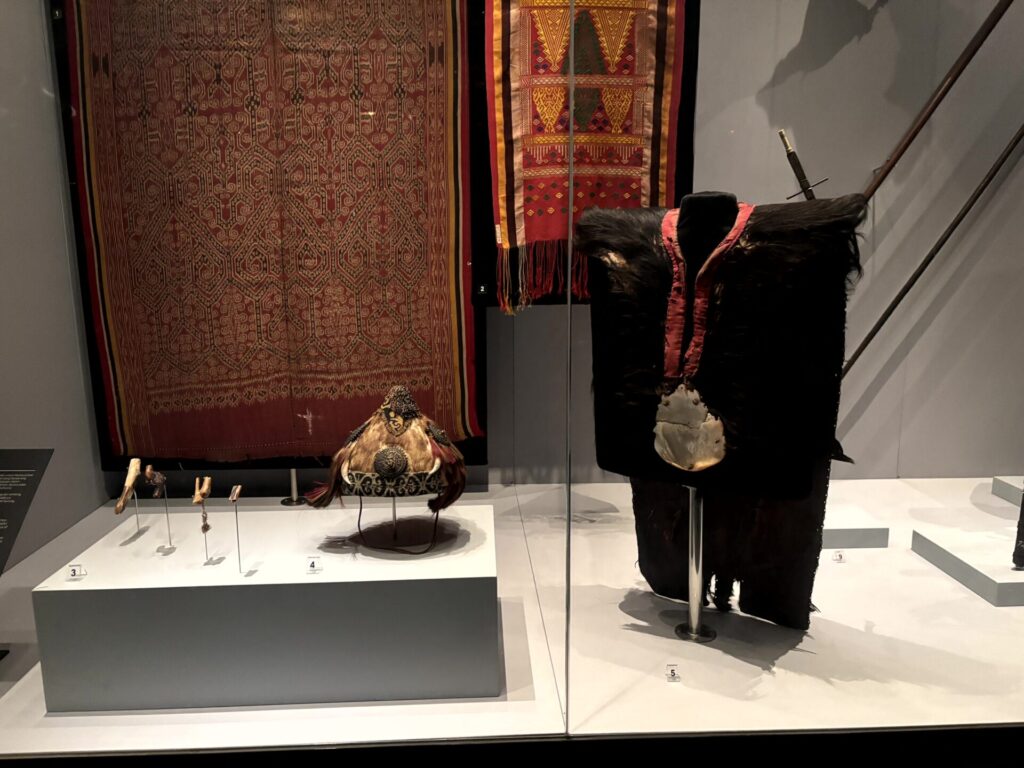
Armor was on display too. It uses animal fur, which makes it completely different from Japanese armor. Still, the fact that it is decorated is something Borneo and Japan have in common.
As I continued through the exhibits, I found something astonishing hanging in the display of a traditional dwelling.
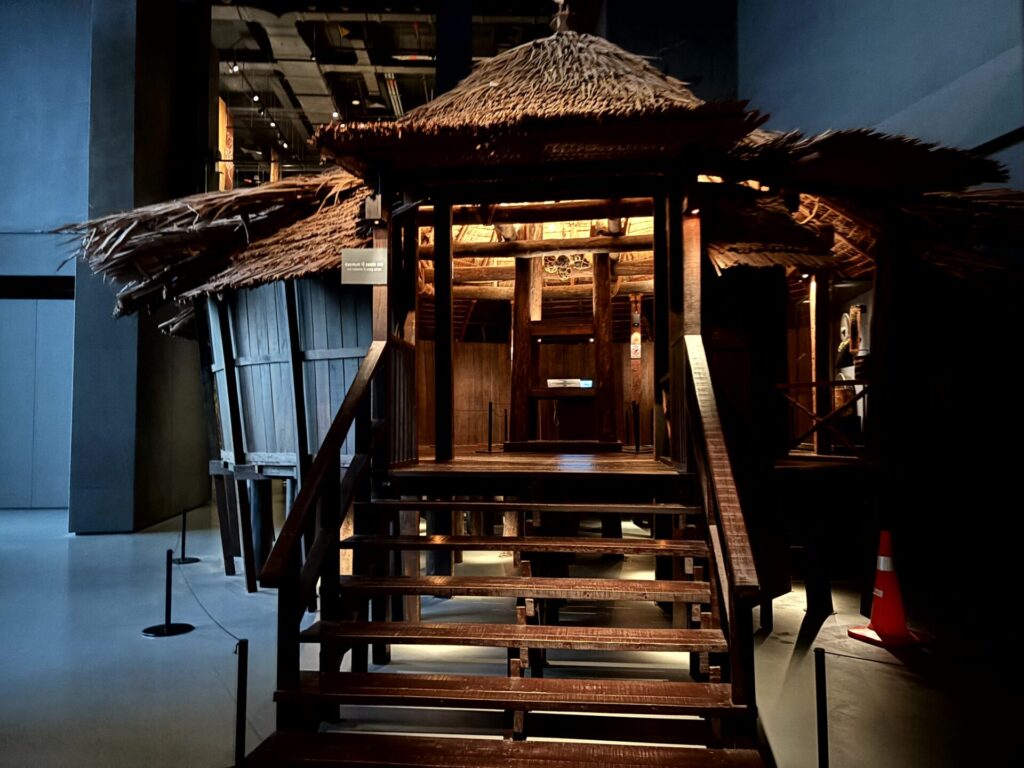
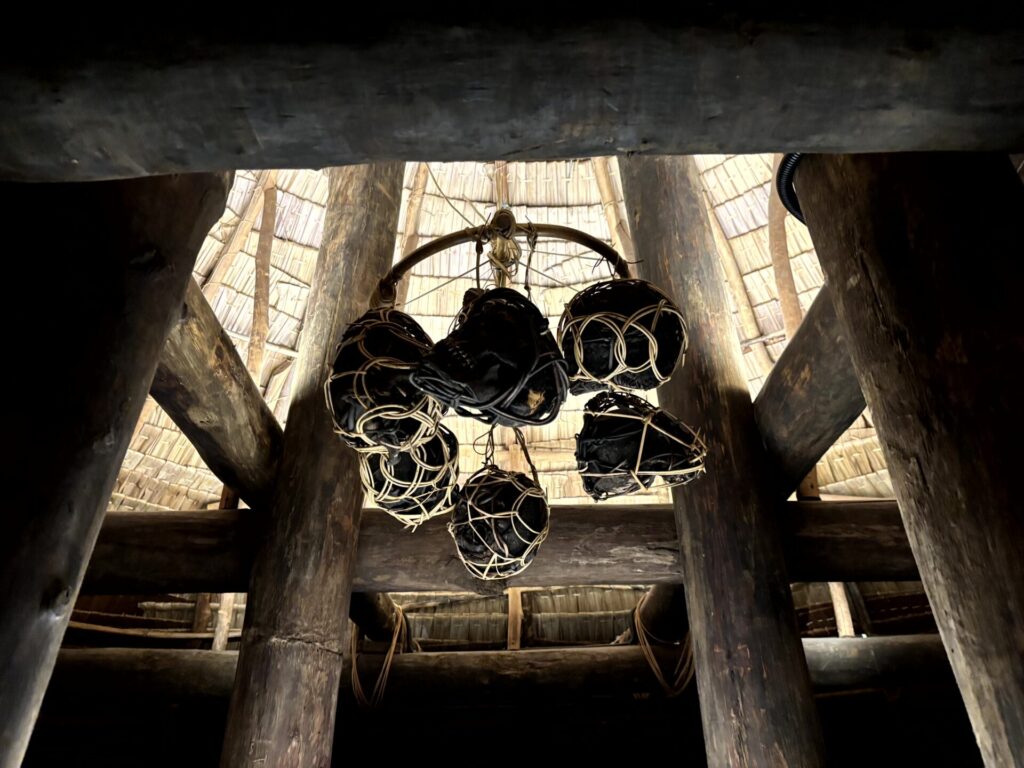
Yes. Skulls. The skulls were not thrown away but carefully kept inside the house, and people honored them with offerings of food in rituals. It was believed that by properly enshrining them, the spirits of former enemies would become protectors of the village. This tradition partly continues today, and a skull ritual is still held as a symbol of peace between communities in Sarawak and Kalimantan (the Indonesian side of Borneo).
Carvings Believed to Hold Power
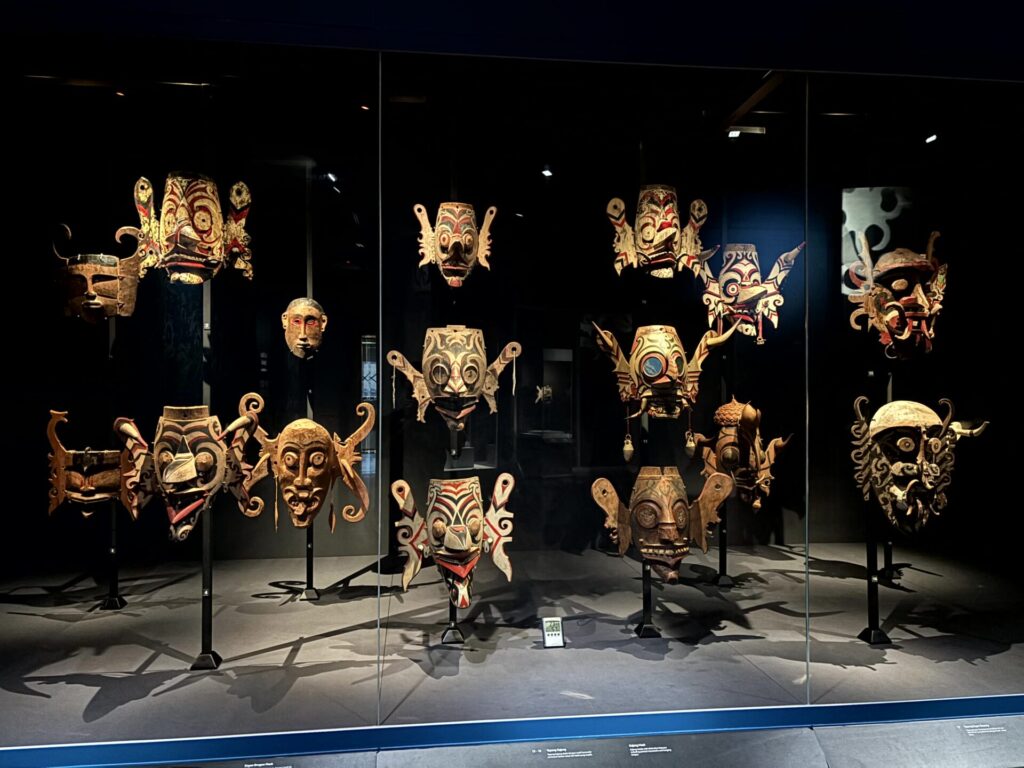
In Borneo, almost every ethnic group has carving skills, and it was believed that certain patterns carried powers such as protection and fertility. People likely wore masks like these in rituals to pray for a good rice harvest.
Men entering the forest are also said to have worn carved amulets. This culture shows up in their swords as well.
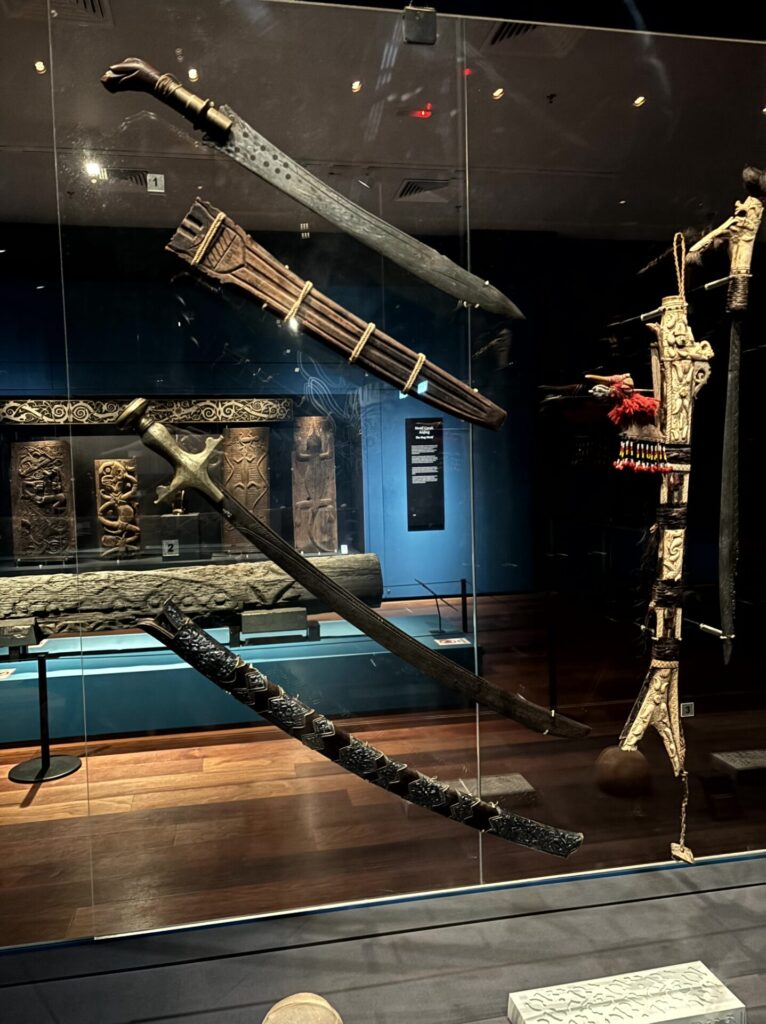
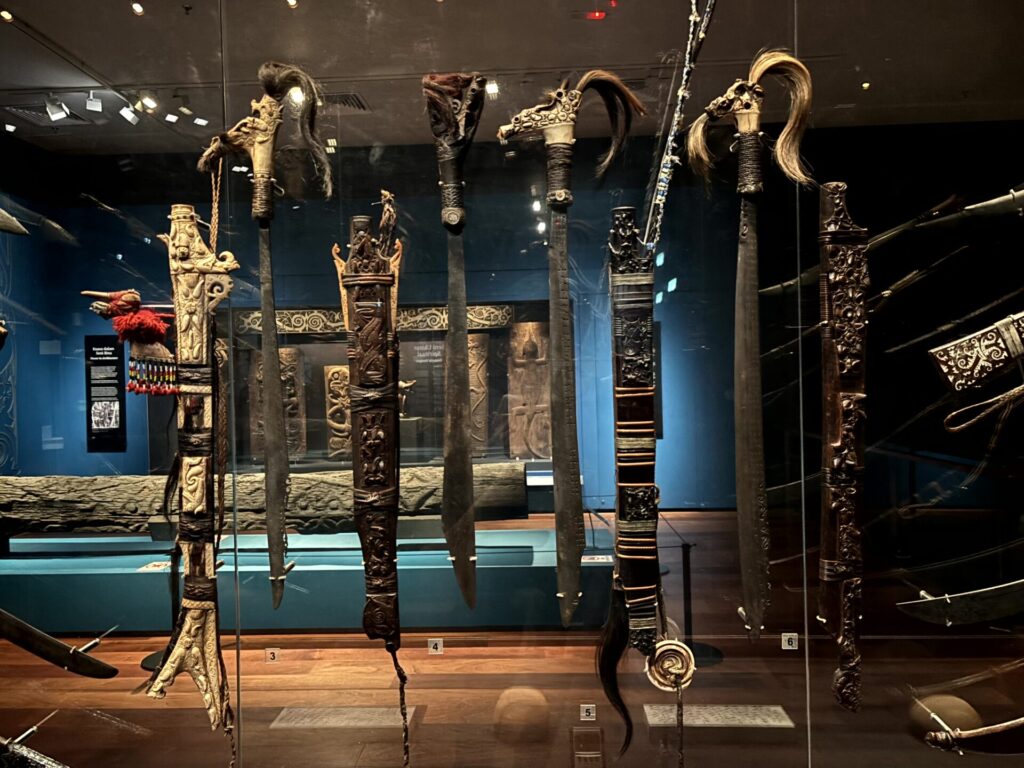
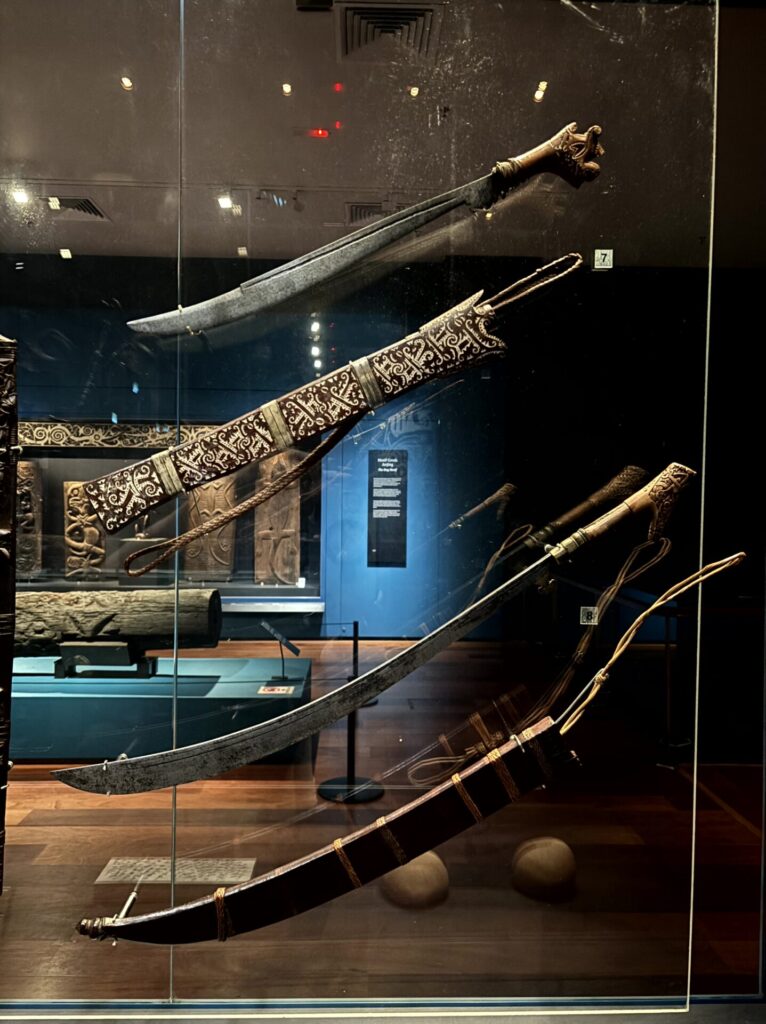
Their swords had beautiful carvings on the hilts and scabbards. They must have served many roles at once: beauty, practicality, and protection against evil.
Japanese swords, too, carry auspicious designs such as dragons and lions on their fittings, expressing a wish to protect the owner. Even in lands far apart, the idea of putting a prayer into a sword seems to be shared.
That said, devoting such intense attention to the blade itself may be something unique to Japanese sword culture.
The Era of the British Kings
Sarawak has a history that is rare even in world history. For about 100 years starting in 1841, a British family called the Brookes ruled this land as “Rajahs,” or kings. Beginning with James, followed by Charles and then Vyner, they became known as the “White Rajahs.”
The Brookes built forts at strategic points along the rivers and stationed European officers there, and markets grew up around them. A model of Fort Alice, named after the wife of the second Rajah, Charles, was also on display.
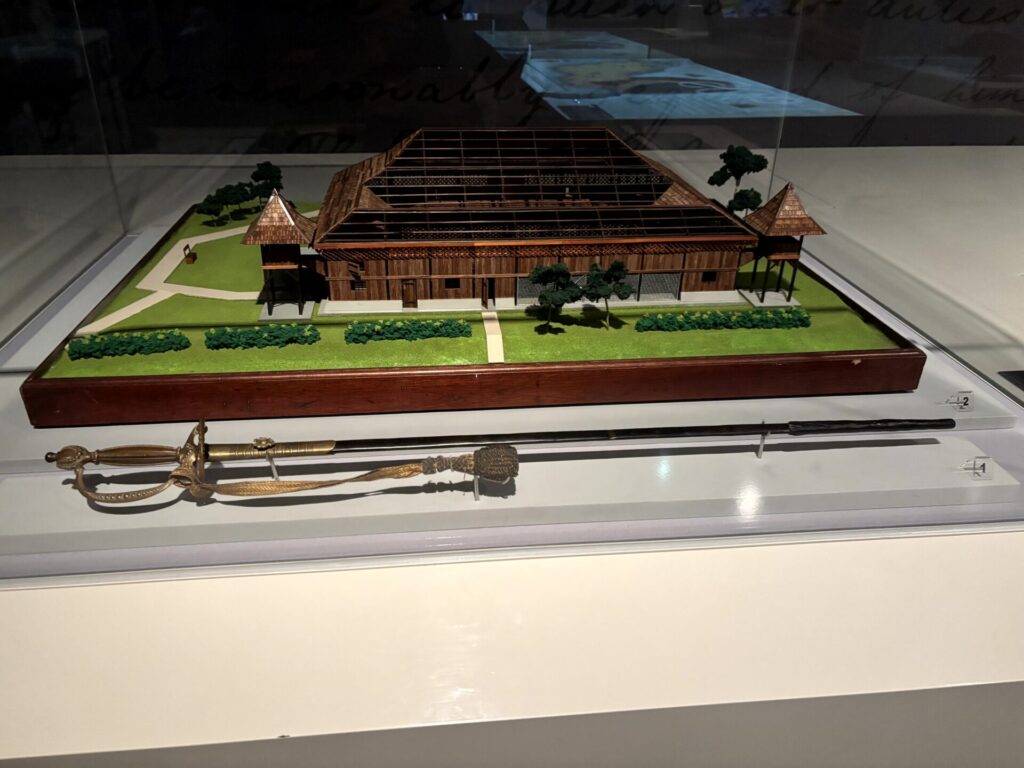
As a sword lover, I couldn’t miss the British-style sword. It is said to resemble the sword carried by Sarawak’s administrative officers during the reign of the third Rajah.
In the same 19th century, samurai in Japan were still walking around with swords at their sides. Imagining the parang and the British sword side by side in Borneo, I felt a strange connection across the eras.
Why Is There a Japanese Sword Here?
The Japanese Occupation of Sarawak
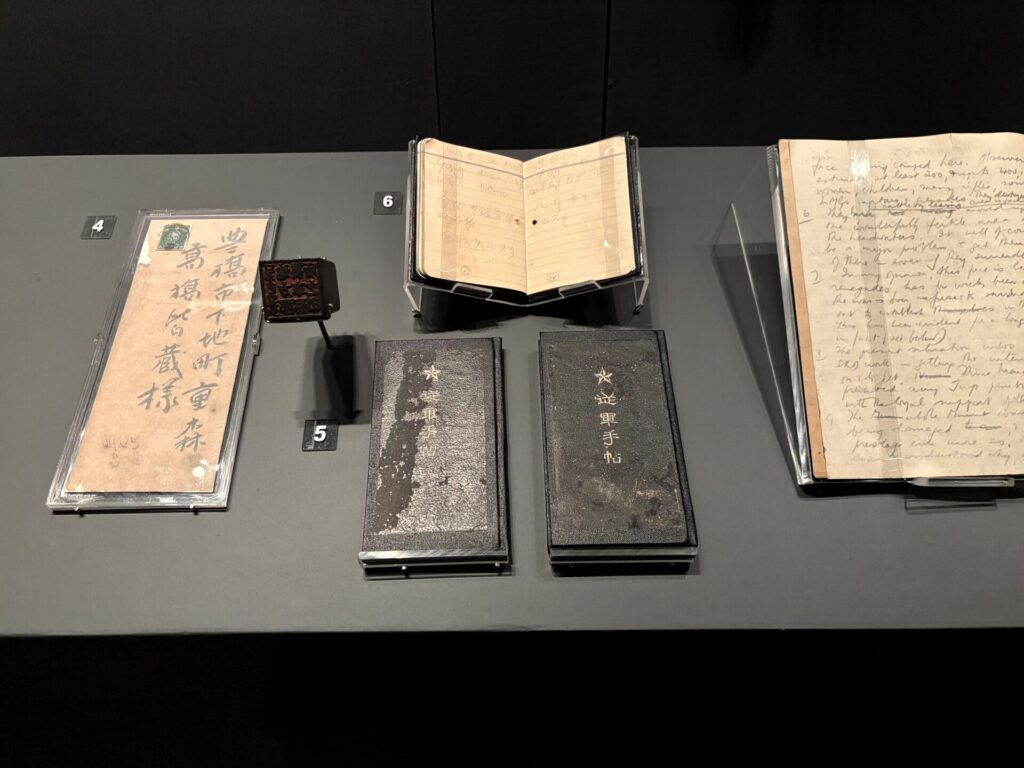
The reason a Japanese sword is here goes back to World War II. In December 1941, the Japanese army landed in Sarawak, and the occupation lasted until 1945. As a Japanese person, I feel I must learn not only about Japan’s past as seen from within Japan, but also as it is seen from abroad.
Major-General Yamamura’s Surrender Sword
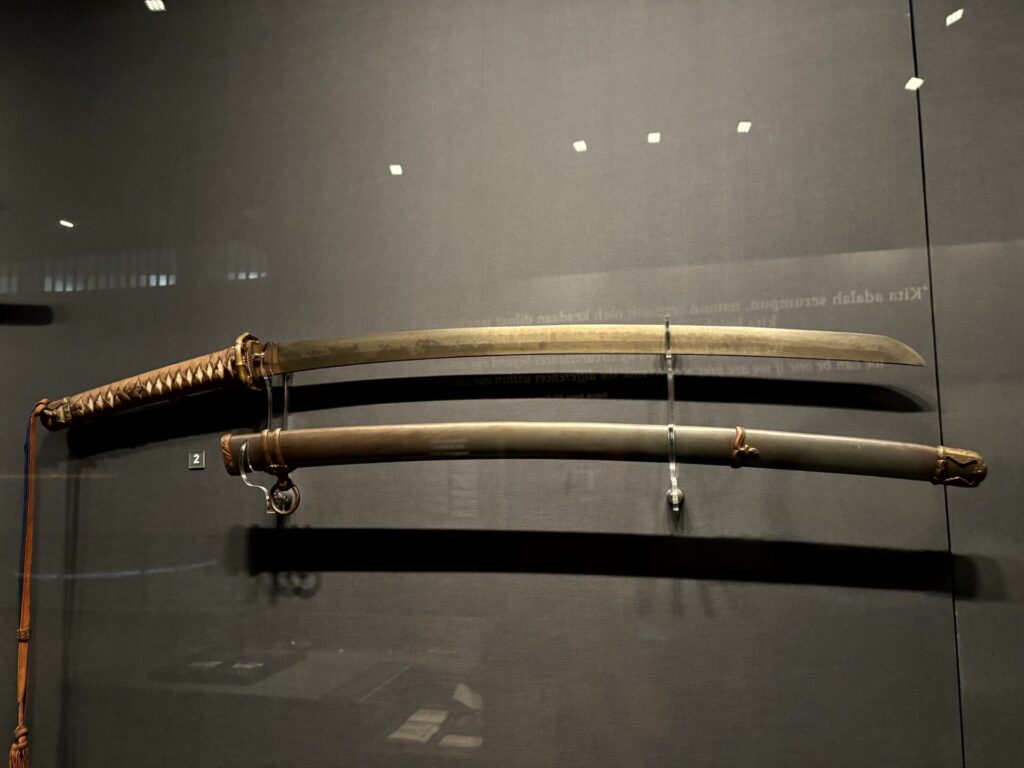
And here is the sword that was, in a sense, the purpose of my visit. On September 11, 1945, aboard the Australian warship HMAS Kapunda anchored in the Sarawak River, Major-General Hiyoe Yamamura of the Japanese army signed the surrender document. The sword he handed over to Australian Brigadier Eastick at that time is this one.
It is a broad, dignified blade. The fittings and tsuba (handguard) also have an elegant design that draws you in.
Knowing that it was handed over at the moment of surrender, I feel once again that the sword truly is the soul of the Japanese. As someone who handles swords, it makes me renew my sense of responsibility.
A Shin-Gunto Through a Sword Dealer’s Eyes
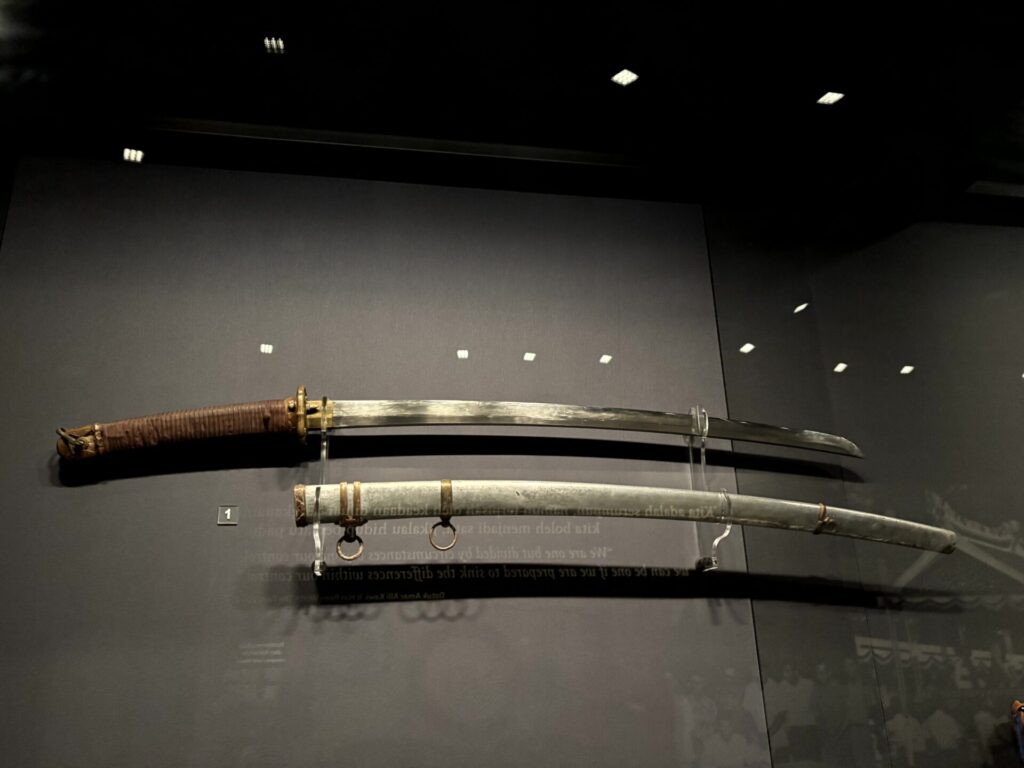
Next to it was a shin-gunto, a sword used by officers of the Imperial Japanese Army. The way the tsuka-ito (handle wrap) is wound is quite unusual. The ishizuke, the metal cap at the tip of the scabbard, also seems to have been lost.
Was it wrapped this way on purpose, or was it wrapped by someone who rarely handled swords? Letting your mind wander through history like this is one of the real joys of viewing swords.
The Only Building Constructed by the Japanese Military
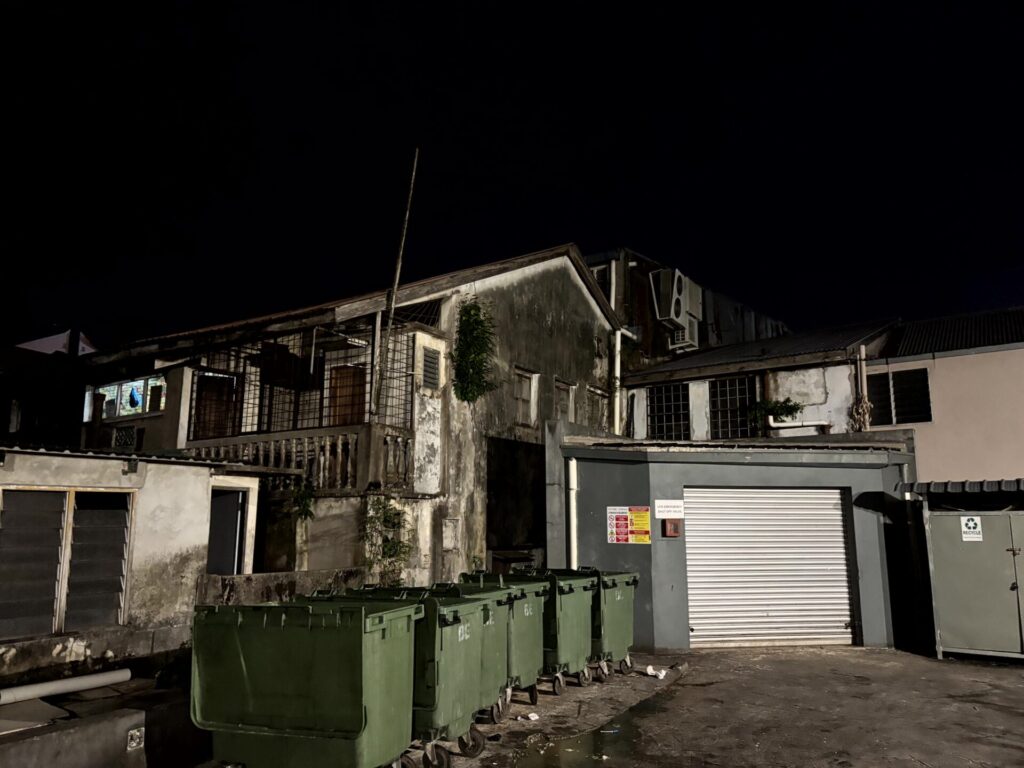
After leaving the museum, I also visited the Japanese Building in Kuching’s Old Town. The road there was so full of Southeast Asian atmosphere that I started to wonder whether it was really there, but there it was.
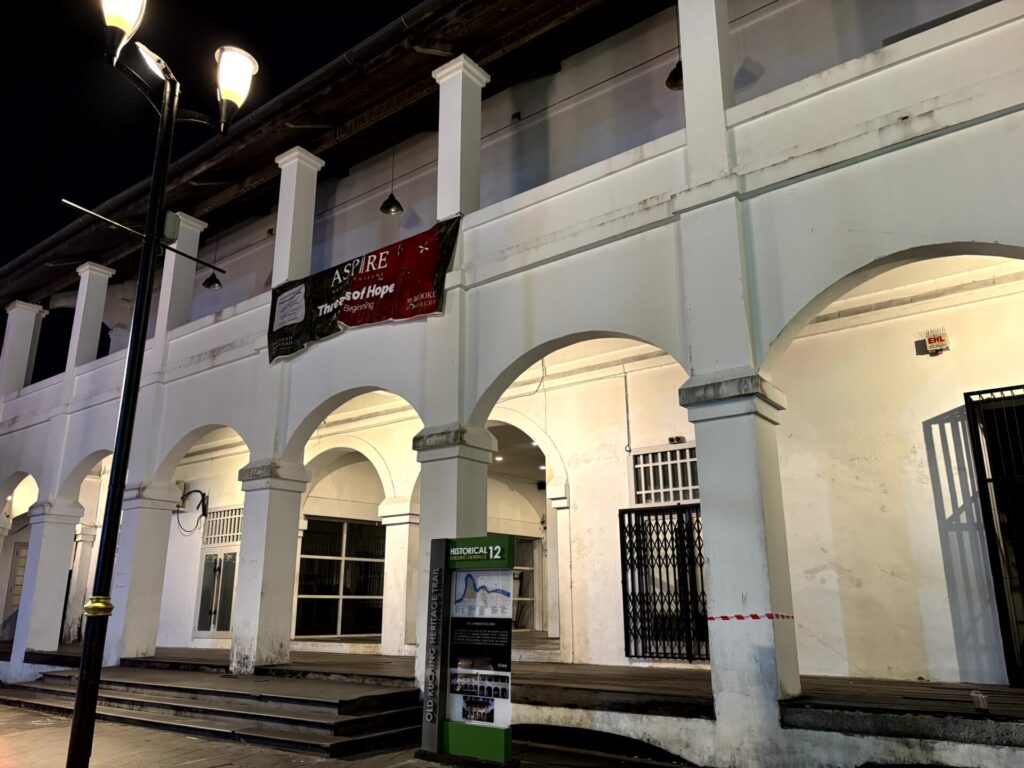
This is the only administrative building constructed by the Japanese military during World War II. Prisoners of war from Sabah and Sarawak were marched here every day from the camp and forced to work on its construction.
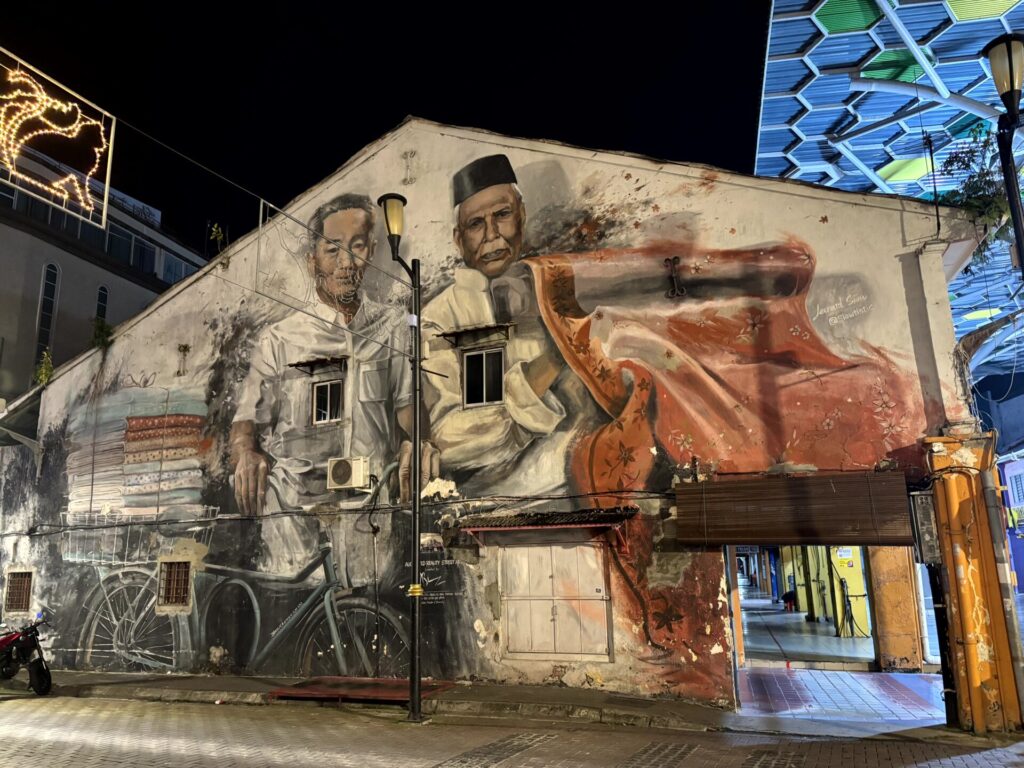
Across the street there was more art, so I’ll share it here. It’s a painting of people selling fabric. I personally love how art like this makes exploring the city more fun.
Final Thoughts
The parang of Borneo’s indigenous peoples, the sword from the era of the British Rajahs, and the Japanese military swords. At the museum in Kuching, the history of the people who came and went through this land has been preserved in the form of swords.
This trip reminded me that a sword is not just a weapon. It reflects the lives and beliefs of the people who carried it, and the era itself. If you ever have the chance to visit Malaysia, Indonesia, or Brunei, I hope you’ll make the trip to Kuching.
Oh, and even though it’s called the City of Cats, I hadn’t seen a single cat all day. But I finally met one at night, so here it is. Maybe they’re nocturnal?
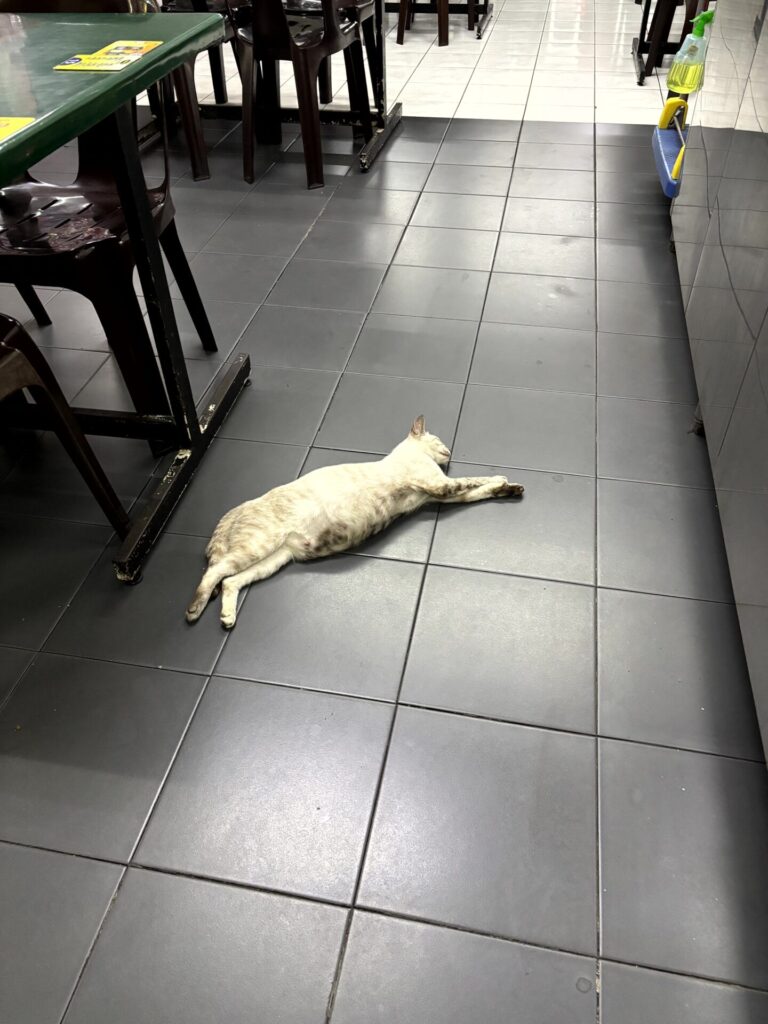
Yep, totally relaxed. Very cat-like!
For sword lovers, I give the Borneo Cultures Museum in Kuching 4 out of 5 stars! The Japanese swords are few, but the parang collection and the surrender sword make it well worth the visit. See you next time!