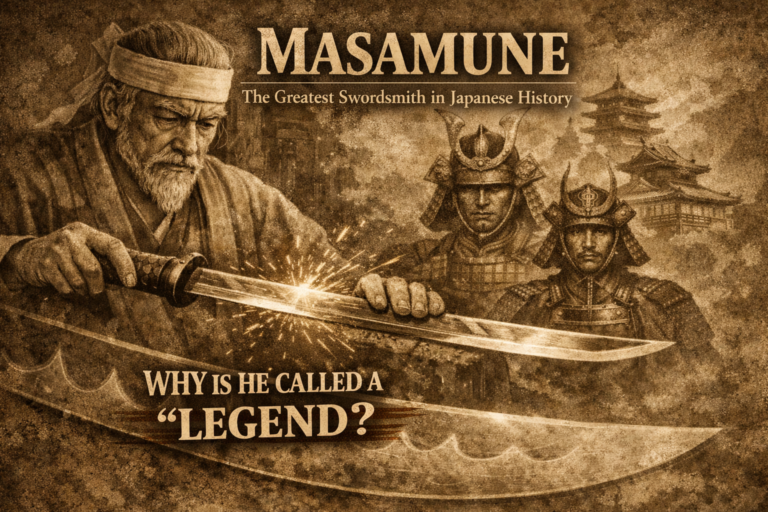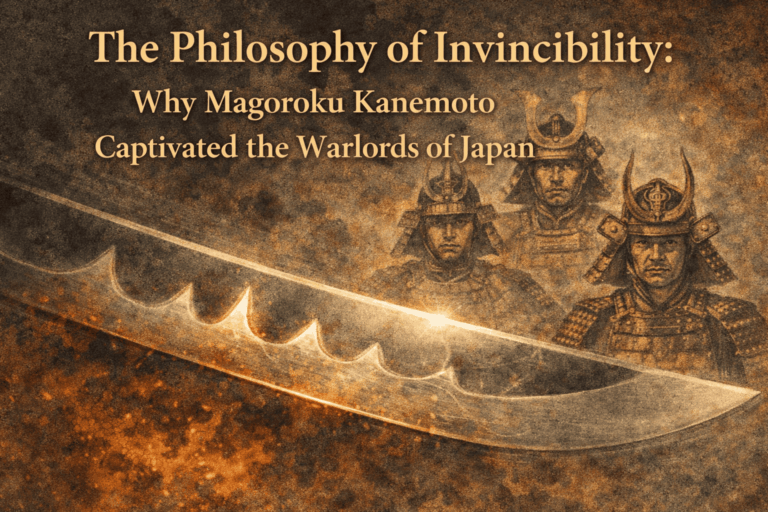

“Muramasa” is perhaps the most famous name in the world of Japanese swords, often shrouded in dark myths and whispers of “cursed blades.” But was it really magic, or was it a political coincidence?
Let’s dive into the fascinating history of why the Tokugawa Shogunate feared these blades so much.
【The “Cursed Blade” Legend: Why is Muramasa Scary?】
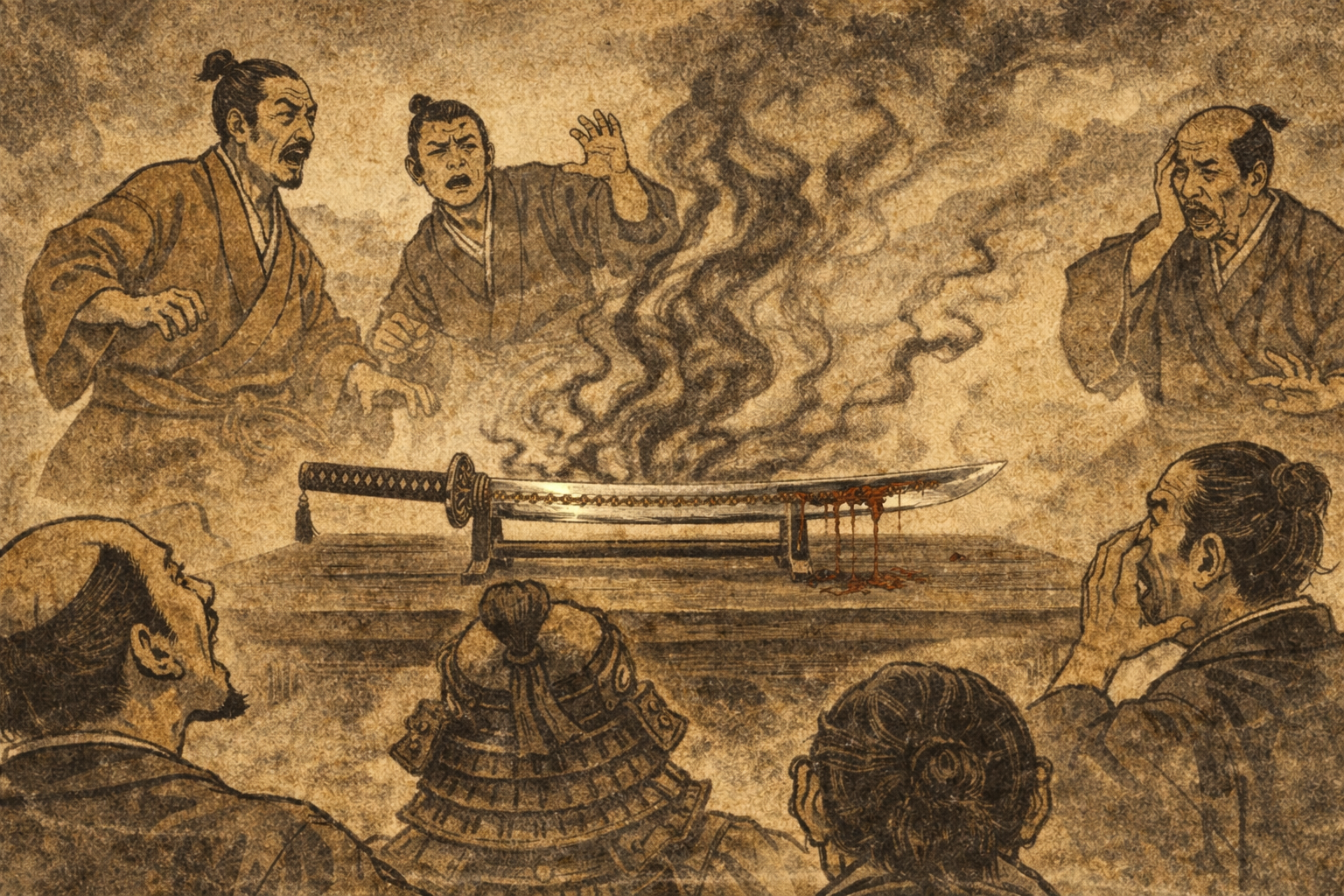
In movies and anime, Muramasa is often depicted as a bloodthirsty sword that possesses its owner, forcing them to kill. Legend says that once a Muramasa is unsheathed, it cannot be returned to its scabbard until it has tasted blood—even the blood of its own master.
But behind this scary story lies a practical reality. Muramasa was a real master swordsmith who lived in Ise(伊勢) during the 1500s.
His blades were famous not for curses, but for their terrifying sharpness. During the Sengoku period, samurai wanted weapons that worked, and Muramasa’s swords were the ultimate “high-performance tools” of the era.
【The “Anti-Tokugawa” Sword: A Series of Unfortunate Events】
The real reason Muramasa became known as “evil” was because of a string of tragic accidents involving the family of Tokugawa Ieyasu(徳川家康), the great unifier of Japan.
Imagine if a specific brand of car was involved in every accident your family ever had. You would start to think that brand was cursed. That is exactly what happened to Ieyasu:
- His grandfather was killed by a Muramasa sword.
- His father was wounded by a Muramasa.
- Ieyasu himself accidentally cut his hand with one.
- Most tragically, his son was ordered to commit ritual suicide (Seppuku(切腹)), and the sword used for the execution was a Muramasa.
To Ieyasu, Muramasa wasn’t just a sword maker; he was a symbol of bad luck for the Tokugawa clan. Eventually, the Shogunate banned Muramasa blades, ordering samurai to get rid of them.
【The Rebellion’s Choice: Why Samurai Hid Their Muramasas】
Because the Shogunate feared the blade, Muramasa became a symbol of resistance. Samurai who secretly hated the Tokugawa government would keep Muramasa blades as a sign of their defiance.
Some even went as far as to file off the signature on the sword’s tang (Nakago(茎)) to hide its identity while keeping its legendary sharpness. To a rebel, holding a Muramasa was like holding the ultimate weapon against the establishment.
【The Art of the “Mirror Image” (Muramasa-ba)】
The beauty of a Muramasa is as unique as its legend. While most swords have different patterns on each side, Muramasa perfected a style called Muramasa-ba(村正刃).
Imagine folding a piece of paper in half to make a perfectly symmetrical inkblot. In a Muramasa blade, the wavy pattern (Hamon(刃文)) on one side is a near-perfect mirror image of the other side.
This symmetry is incredibly difficult to achieve and gives the blade a cold, haunting, and sharp beauty that is unlike any other.
【Conclusion: From Weapon to Legend】
Muramasa wasn’t evil; he was simply too good at his job. He created blades that were so sharp and so popular that they naturally found their way into the hands of the strongest warriors—and the most violent conflicts.
At our gallery, we focus on the true craftsmanship behind these legends. We provide a bridge for collectors to own pieces that embody this intense history and skill.
We invite you to explore our selected collection, where every blade tells a story that has survived centuries of war and mystery.