The Truth About Yoshimitsu Tanto: A Legacy Forged in Steel
Among the thousands of swordsmiths who shaped Japan’s blade-making tradition, the name Yoshimitsu occupies a place of extraordinary reverence. For collectors and martial arts enthusiasts alike, a Yoshimitsu tanto represents more than a short blade — it embodies centuries of craftsmanship, cultural identity, and an almost spiritual devotion to perfection. But what exactly makes these blades so coveted, and what should you know before pursuing one? Let’s cut through the mystique and examine the real story behind the Yoshimitsu tanto.
Who Was Yoshimitsu? The Swordsmith Behind the Legend
The name “Yoshimitsu” has been carried by multiple swordsmiths across different provinces and eras of Japanese history. The most celebrated is Awataguchi Yoshimitsu, a Kamakura-period smith (circa late 13th century) who worked in Yamashiro Province (modern-day Kyoto). He is widely considered one of the greatest tanto makers in the entire history of Japanese bladesmithing, often ranked alongside legends like Masamune and Sadamune.
Awataguchi Yoshimitsu was the youngest son of Awataguchi Kuniyoshi and the last of the illustrious Awataguchi school. While other smiths in his lineage produced tachi and other long swords, Yoshimitsu focused almost exclusively on tanto and short blades. This specialization allowed him to refine his craft to an unparalleled degree, and the surviving examples of his work are considered national treasures of Japan.
Other Smiths Named Yoshimitsu
It’s important to understand that “Yoshimitsu” was not a unique name in Japanese swordsmithing. Several other notable smiths bore the same characters in their signature:
- Osafune Yoshimitsu — A smith from the Bizen tradition, working in the renowned Osafune school. Blades attributed to this lineage often appear as mumei (unsigned), requiring expert appraisal for attribution.
- Tosa Yoshimitsu — A smith from Tosa Province (modern Kochi Prefecture), representing a distinct regional style with its own forging characteristics.
- Yamato koku ju Yoshimitsu — A smith from Yamato Province whose work has received prestigious NBTHK Juyo certification, confirming its importance as a cultural artifact.
Each of these smiths brought their own regional traditions and techniques to their blades, making the identification and attribution of Yoshimitsu tanto a fascinating — and sometimes contentious — field of study.
What Makes a Yoshimitsu Tanto Special?
The tanto crafted by Awataguchi Yoshimitsu are celebrated for several distinctive qualities that set them apart from the work of other period smiths.
The Hada: A Mirror-Like Steel Surface
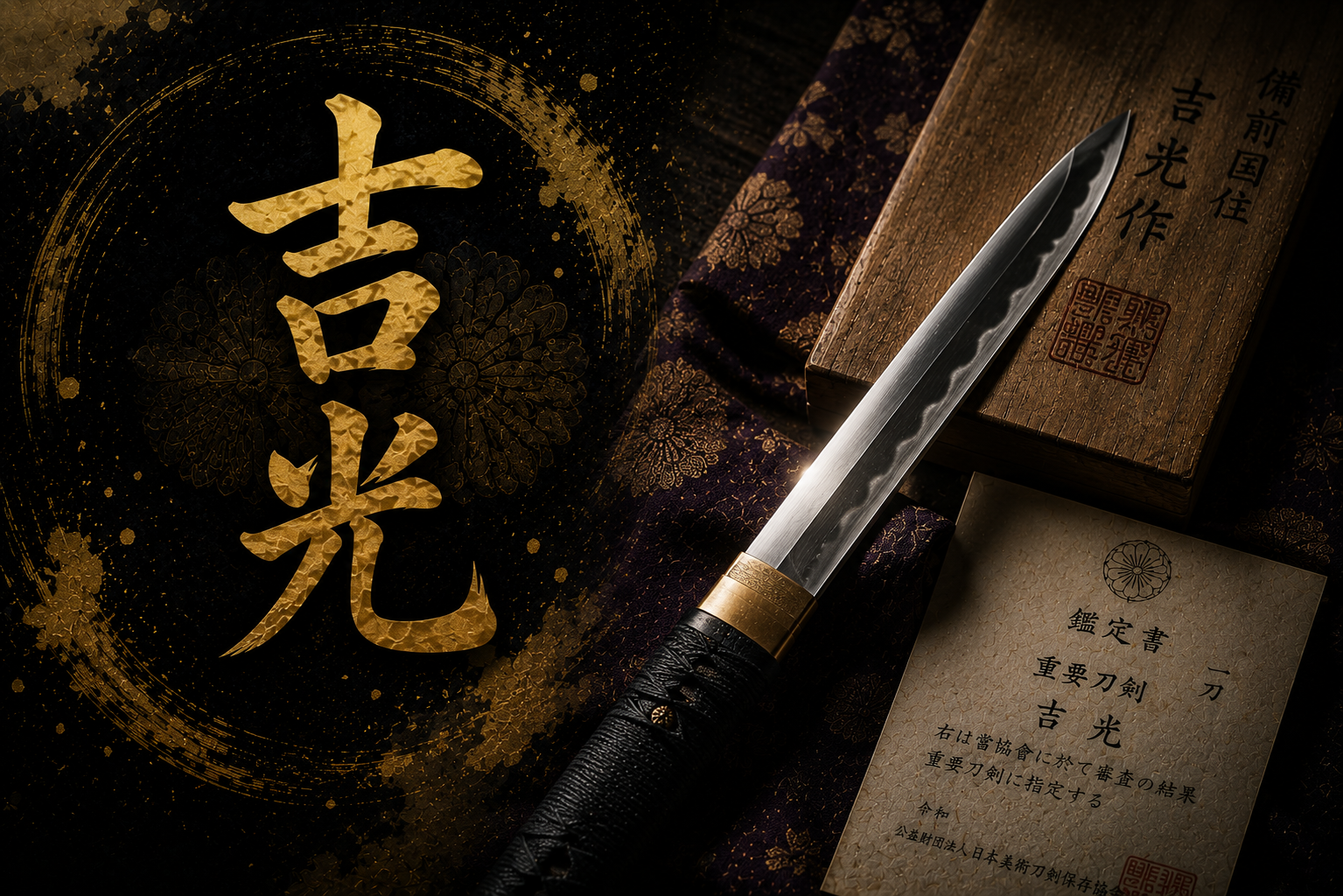
Yoshimitsu’s blades are famous for their exceptionally fine nashiji-hada (pear-skin grain), a surface texture so refined that it approaches a nearly invisible grain structure. This quality results from meticulous folding and forging techniques that create an incredibly tight and uniform steel body. When polished by a skilled togishi, the surface of a Yoshimitsu tanto has an almost luminous quality that distinguishes it immediately from coarser work.
The Hamon: Subtle Brilliance
Rather than the dramatic, flamboyant temper lines favored by later schools, Yoshimitsu tanto typically feature a suguha (straight) or gently undulating hamon. This restrained approach reflects the Kamakura-period aesthetic of disciplined beauty — power expressed through subtlety rather than spectacle. The nie (martensite crystals) along the temper line are often bright and well-defined, creating a delicate shimmer when viewed under proper lighting.
Form and Proportions
Yoshimitsu tanto tend to be hira-zukuri (flat-ground without a ridge line) with modest dimensions — typically under 25 centimeters in blade length. Their proportions reflect a period when the tanto served both as a practical weapon and as an intimate personal accessory carried close to the body. The blades often have a slight uchizori (inward curve) or are nearly straight, contributing to an elegant and purposeful silhouette.
Collecting Yoshimitsu Tanto: What You Need to Know
Authentication and Certification
Given the extraordinary value of genuine Yoshimitsu blades, authentication is paramount. The NBTHK (Nihon Bijutsu Token Hozon Kyokai, or Society for the Preservation of Japanese Art Swords) provides the most widely recognized certification system. Their papers range from Hozon (worthy of preservation) to Juyo (important) and Tokubetsu Juyo (especially important). A Yoshimitsu tanto with Juyo or higher certification represents both a significant cultural artifact and a substantial financial investment.
Many Yoshimitsu tanto encountered on the market are mumei — unsigned. This doesn’t necessarily diminish their value. Over centuries, blades were shortened, remounted, or lost their tang signatures through wear. Expert appraisers at organizations like the NBTHK can attribute unsigned blades to specific smiths based on forging characteristics, temper patterns, and overall construction. However, attributions described as “not guaranteed” indicate that the connection to a specific smith remains uncertain, and collectors should price and evaluate such pieces accordingly.
The Question of Provenance
Authentic Awataguchi Yoshimitsu tanto are exceedingly rare. Most reside in museums or private collections in Japan and seldom appear on the open market. When they do, prices can reach into the hundreds of thousands of dollars or more. Collectors should approach any blade claimed to be by the original Yoshimitsu with appropriate skepticism and demand thorough documentation.
Tanto by later or regional smiths bearing the Yoshimitsu name — from the Osafune, Tosa, or Yamato traditions — are more accessible, though still highly collectible. These blades carry their own historical significance and artistic merit, and they offer collectors the opportunity to own a piece of Japanese sword history at a more attainable level.
The Tanto’s Role in Japanese Martial Culture
The tanto was far more than a simple dagger. In samurai culture, it served as a weapon of last resort, a tool for ritual purposes, and a symbol of personal honor. Women of the warrior class often carried a small tanto called a kaiken for self-defense. The blade’s intimate size meant that its craftsmanship was scrutinized at close range — there was no hiding imperfections on a tanto the way there might be on a longer blade viewed at distance.
This is precisely why the finest tanto makers, like Yoshimitsu, earned such enduring fame. Their work had to withstand the closest possible examination, and the best examples do so magnificently, revealing new details and deeper beauty with every viewing.
Where to Find Authentic Japanese Tanto Today
For those inspired to begin or expand a collection, the journey starts with trusted sources. Reputable dealers who provide proper documentation, NBTHK papers, and transparent condition reports are essential. At Ifu, we offer a curated selection of high-quality, authentic Japanese swords — including tanto — sourced with care and presented with the detailed information collectors deserve.
Whether you’re drawn to the legendary name of Yoshimitsu or simply captivated by the quiet power of a beautifully forged tanto, understanding the history, craftsmanship, and market realities behind these blades will make your collecting journey richer and more rewarding. The legacy of Yoshimitsu is not merely preserved in steel — it lives on in every collector who takes the time to truly appreciate it.